
How to Train Around a Desk Job
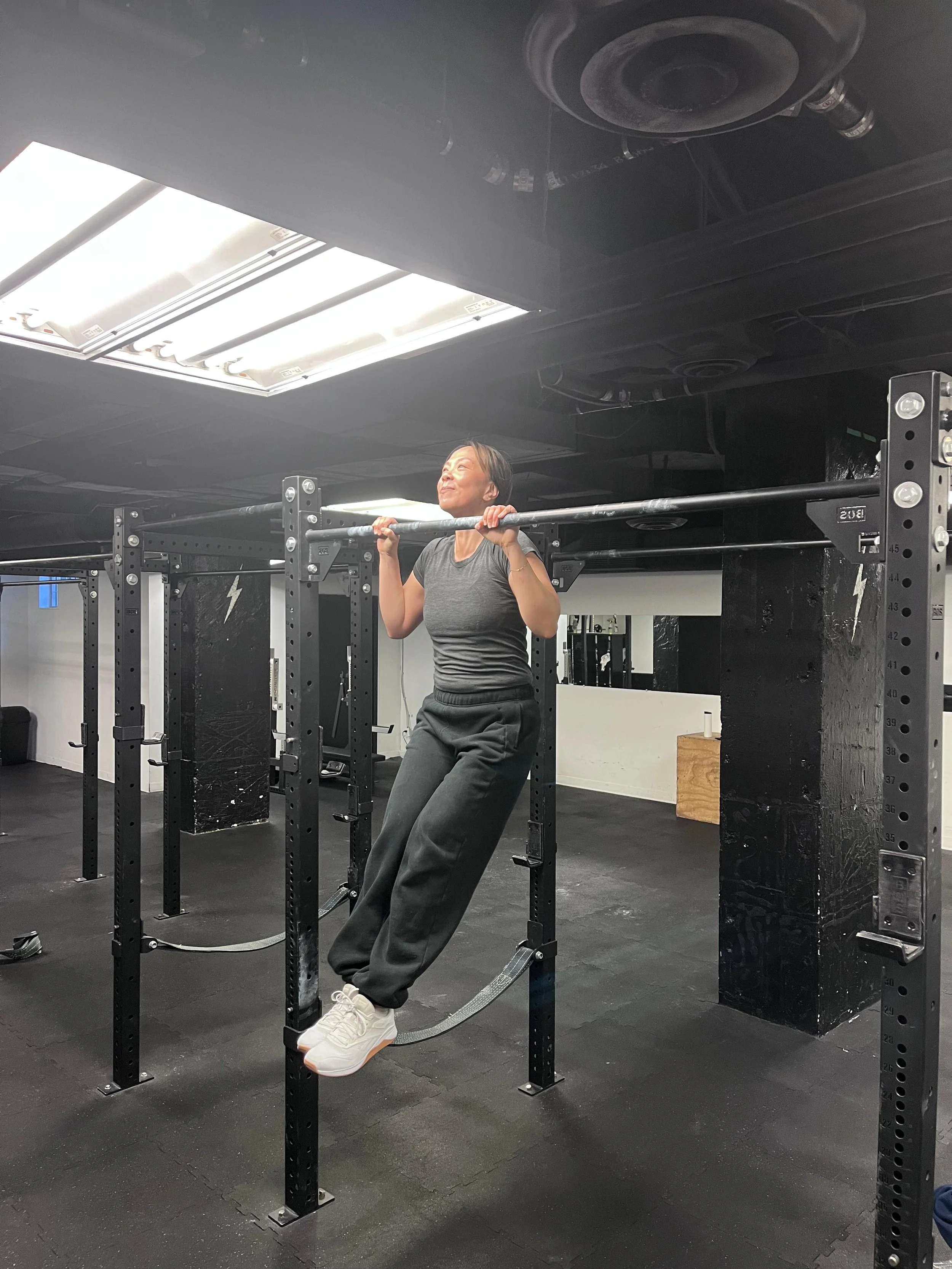
Pull twice as often as you push.
When you sit at a desk for most of the day, then go home and sit some more… your body is adapting to that position and is adapting to the energy output required to maintain that position (it’s almost 0).
The body adapts to the demands placed on it. Sit in a chair with your hips flexed, your shoulders rounded forward, and your neck craned toward a screen for forty or fifty hours a week, and your body will begin to reflect that position even when you're not sitting in it. Tight hip flexor, hamstrings and calves. Weak glutes. Rounded upper back. Forward head posture. A lower back that aches and a stiff neck.
Most people who sit at a desk all day have a pretty good idea that this is happening. What they don't always know is how to train specifically to counteract it rather than just adding general exercise on top of a body that's already compensating.
What a Desk Job Actually Does to Your Body
Understanding the specific problems helps you address them directly rather than just hoping general exercise fixes everything.
Hip flexors shorten and tighten. When you sit for extended periods your hip flexors, the muscles that connect your spine and pelvis to your upper leg, are in a contracted position for hours at a time. Over weeks and months they adapt to that shortened length. The result is that when you stand up, walk, or try to extend your hip fully in a lunge or a deadlift, those tight hip flexors pull your pelvis into an anterior tilt. That anterior tilt starts to put pressure on your lower back in an unnatural way.
Glutes switch off. Sitting puts the glutes into an elongated position and essentially tells them they don't need to work. Over time the neural connection between your brain and your glutes weakens, a phenomenon sometimes called gluteal amnesia. Weak, inhibited glutes mean your lower back and hamstrings compensate for the work your glutes should be doing. That compensation pattern is one of the most common drivers of lower back pain. It also creates SBS or saggy butt syndrome (I made that one up but it’s true).
The upper back rounds and weakens. Hours of reaching forward toward a keyboard and screen pull the shoulders forward and stretch the muscles of the upper back. The chest muscles tighten. The muscles that retract and depress the shoulder blades, the rhomboids, lower trapezius, and serratus anterior, get long and weak. The result is the classic desk worker posture: rounded shoulders, forward head, compressed neck.
The core stops working properly. Sitting in a chair, particularly with a backrest, removes the need for your core to actively stabilize your spine. Over time the deep stabilizing muscles of the trunk, the ones that protect your spine under load, become less responsive. This is one of the reasons office workers are disproportionately represented in lower back injury statistics.
How to Train Specifically for a Desk Job
The good news is that training can directly counteract every one of these adaptations. The key is prioritizing the right things rather than just doing general exercise and hoping for the best.
Pull more than you push. Most people who start training gravitate toward pressing movements, bench press, push-ups, overhead press. For desk workers, pulling movements, rows, pull-ups, face pulls, need to be prioritized over pressing. The goal is to counteract the tightening of the chest and the weakening of the upper back. A rough ratio of two pulling movements for every one pressing movement is a reasonable starting point for someone coming from a desk job background.
Train your glutes deliberately. Hip hinges, deadlifts, hip thrusts, single leg work. These movements directly target the glutes and teach them to fire properly under load. Don't assume that squatting is enough. The deadlift in particular is one of the most effective movements for desk workers because it trains hip extension through a full range of motion, directly countering the shortened hip flexor pattern that sitting creates.
Work on hip flexor length. This doesn't mean endless static stretching. It means training through a full range of motion, specifically at the end range where the hip flexors are being lengthened under load. A deep lunge, a Bulgarian split squat, a step-up with a full hip extension at the top. These movements address hip flexor tightness in a way that passive stretching alone doesn't.
Train your core to stabilize, not just flex. Crunches aren't the answer. The core's primary job is to resist movement and stabilize the spine under load, not to produce flexion. Planks, dead bugs, pallof presses, carries. These are the movements that rebuild the stabilizing function the core loses from hours of sitting in a supported chair.
Don't skip the upper back detail work. Face pulls, band pull-aparts, and direct work for the muscles that retract and depress the shoulder blades address the specific weaknesses that desk work creates in the upper back. These aren't glamorous exercises but for desk workers they're some of the most important things in a training program.
A good strength training program can counteract the demands of a desk job.
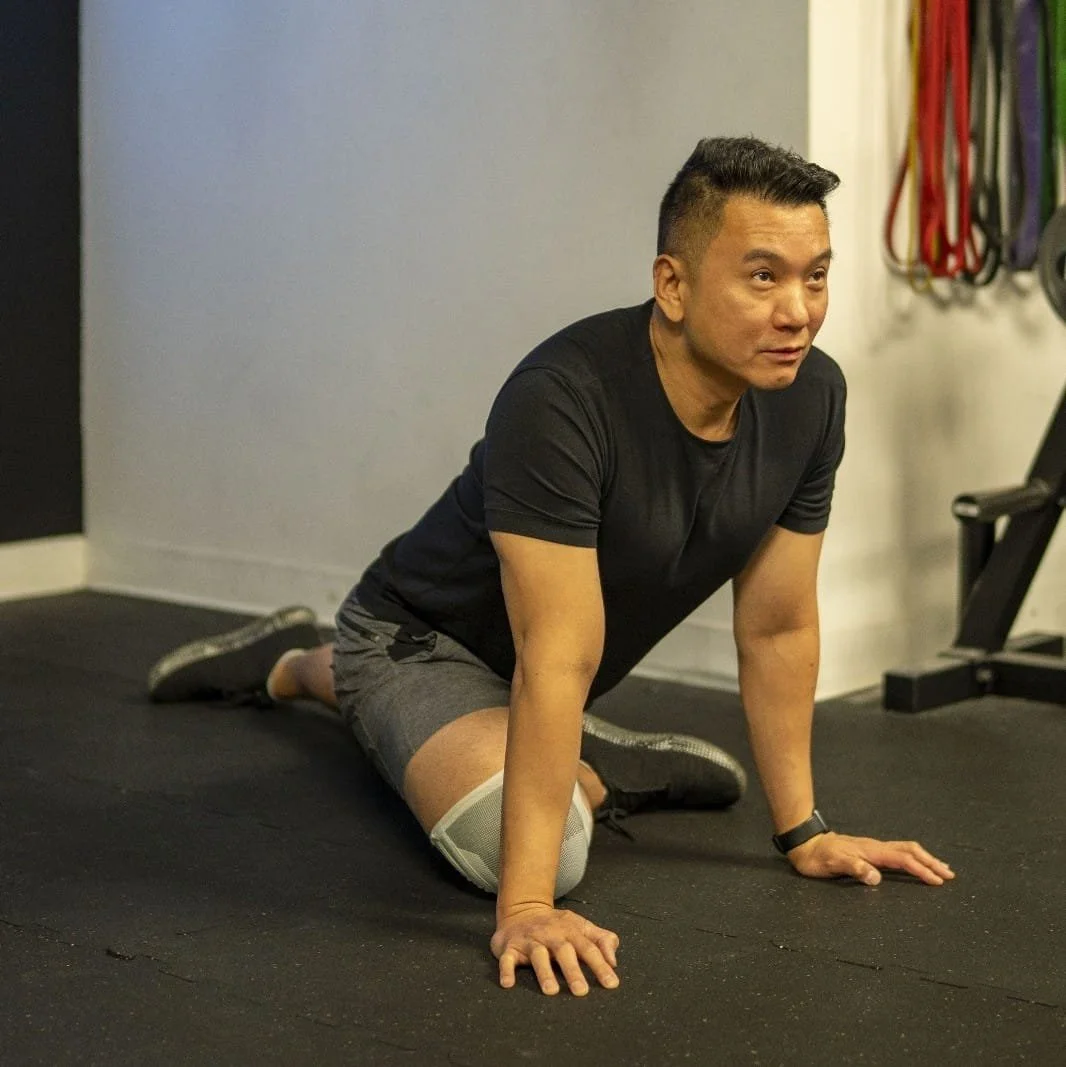
Stretch through the day on your work breaks.
What to Do During the Workday
Training two or three times a week goes a long way. But if you're sitting for ten hours between sessions, those sessions are fighting an uphill battle.
A few habits that make a meaningful difference between training days:
Stand up every thirty to forty-five minutes. Not to do anything specific. Just to break the position. Set a timer if you need to. The interruption of the sitting pattern matters more than what you do when you stand up.
Walk at lunch. Even fifteen to twenty minutes of walking at lunch improves hip flexor length, activates the glutes, and resets your posture in a way that carries through the afternoon. It also does something for your focus and your mood that sitting at your desk through lunch simply doesn't.
Do a few hip flexor stretches and glute activations at your desk. A standing hip flexor stretch held for thirty seconds each side, a few bodyweight glute bridges on the floor, a doorframe chest stretch. These take three minutes and they interrupt the postural patterns that build up across a workday.
Check your setup. Screen at eye level. Chair height so your hips are at or slightly above your knees. Keyboard close enough that your shoulders aren't reaching forward. These adjustments don't fix a desk job but they reduce how aggressively it works against you.
What This Looks Like in Practice
For most desk workers, two to three training sessions per week built around the priorities above, combined with basic movement habits during the workday, is enough to meaningfully counteract what sitting does to the body over time.
The goal isn't to become an athlete. It's to build a body that functions well despite the demands of a modern working life. Strong glutes, a mobile hip flexor, a stable core, and a upper back that can hold your shoulders where they belong.
Most desk workers who start training consistently notice the same things within a few months. The Thursday afternoon lower back ache gets better. Posture improves without thinking about it. Energy through the afternoon is noticeably better on training days. These aren't dramatic transformations. They're the result of training in a way that's actually pointed at the right problems.
If you work downtown and want to build a training program specifically designed around what a desk job does to your body, that's exactly the kind of conversation we have at a No-Sweat Intro.