
Sleep: The Hidden Training Partner You Keep Ignoring
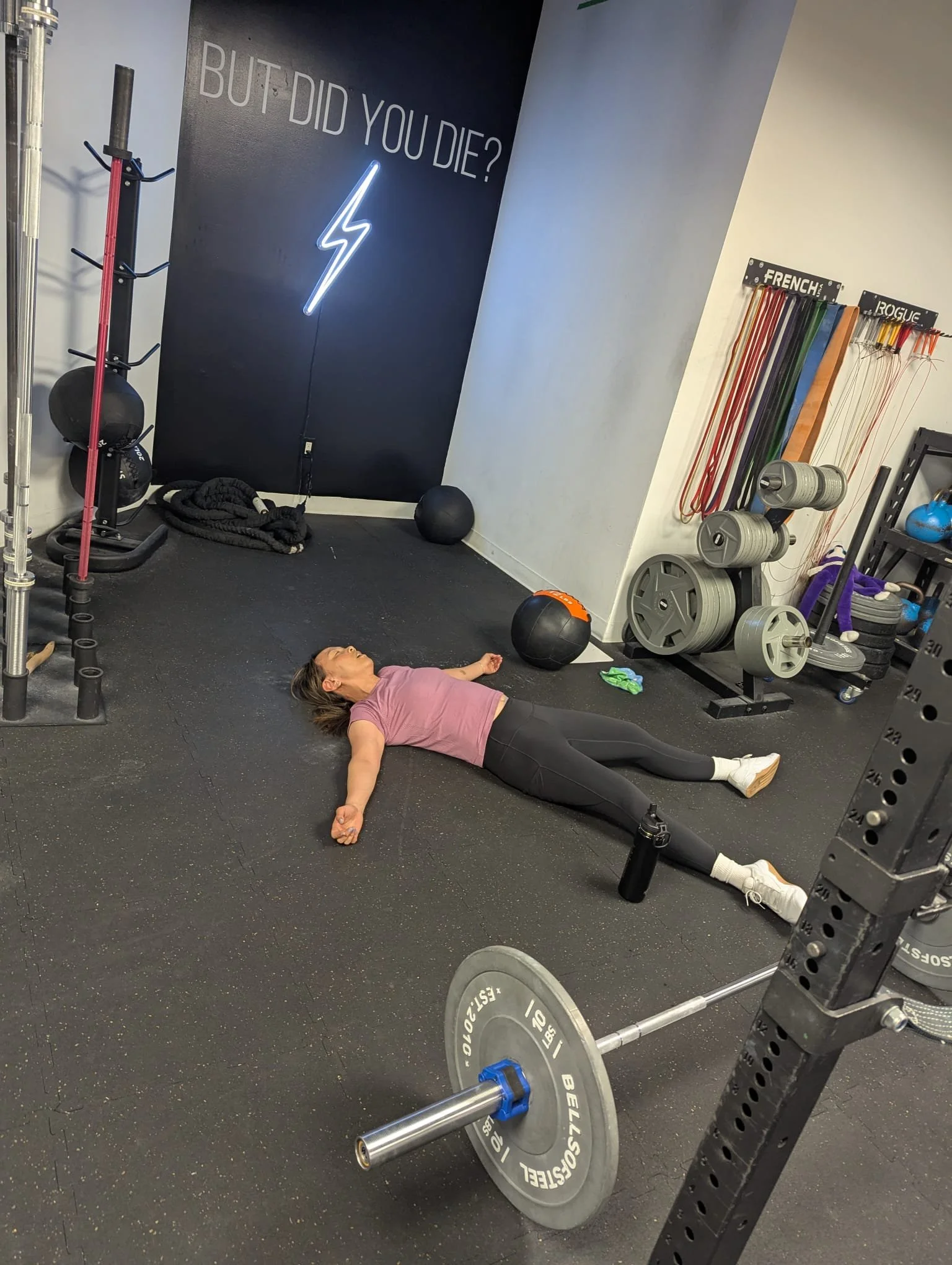
Proper sleep is a huge factor in your fitness results.
Most people know when they are not sleeping enough. They feel it the way you feel a dull ache in an old injury. It drags through your mornings, hangs on the back of your thoughts, and follows you into your workouts like an unwanted spectator. When we meet with clients, one of the most common confessions we hear is this simple sentence: I know I should be sleeping more. It comes with the same tone people use when they admit they should floss more often. The intention is always there, but the follow-through is slippery.
Yet of all the things people try to optimize in their training, nutrition, and lifestyle, sleep is the one pillar that quietly makes everything else work. You can train hard, follow your program, eat in a way that supports your goals, and stay consistent, but if your sleep is shallow and inconsistent, your results will always hit a ceiling. Sleep is the unglamorous work. It does not show up on your Instagram story. Your fitness tracker cannot post a selfie about it. But without it, your progress is built on sand.
Today, we want to take you inside the strange and wonderful process your body goes through each night. I want to show you what actually happens inside those hours when your eyes are closed and you seem to be doing nothing. And we want to explain why sleep might be the very thing standing between you and the weight loss, strength gains, or energy levels you have been chasing.
Let’s lift the curtain on the overnight repair shop that keeps your body running.
The Great Sleep Shortage
Look around any gym at six in the morning. You will see two kinds of people. There are the ones who bounce in with eyes that seem suspiciously bright for the hour. Then there are the ones with coffee glued to their hands who look like their soul is running ten minutes behind their body. If you ask members why they struggle with consistency, decision making, nutrition, or performance, the answer is rarely that they need a more complicated plan. It is almost always that they are exhausted.
Somewhere along the way, many adults treat sleep like a luxury instead of a biological requirement. We sacrifice it for work, for entertainment, for chores, and sometimes for worry. But the body does not negotiate. Your brain does not care that you wanted to watch another episode. Your muscles do not care that you chose to scroll at midnight. Your metabolism follows the same internal rules it always has.
And here is the important point. You cannot out-train, out-diet, or out-supplement poor sleep. You cannot grind your way through it and expect long term success. Your body repairs itself at night. Your mind recalibrates at night. Your metabolism resets at night. When you cut those hours short or fill them with low quality sleep, you start falling behind in ways you feel but cannot always articulate.
If training breaks you down, sleep builds you back up. The question is whether you are giving your body enough time and opportunity to do that job.
Why Sleep Is More Important Than You Think
Think of your training program like a construction site. Every workout is controlled demolition. You create tiny amounts of stress in the tissue. You send signals through the nervous system. You ask your body to become stronger, fitter, leaner, and more capable. But here is the twist. None of that remodeling happens in the gym. Not one pound of muscle is built during a workout. Not one gram of fat is burned on the spot. The gym is where you send the message. Recovery is where the adaptation occurs.
And sleep is the most powerful recovery mechanism your body has.
When you fall asleep, your brain shifts into a different mode of operation. It no longer needs to manage conscious thought, environmental scanning, decision making, or the dozens of tiny tasks that fill your waking hours. It turns its attention inward and starts repairing, replenishing, reorganizing, and recalibrating systems that cannot operate fully during the day. It is the closest thing your biology has to a nightly tune up.
The quality of your sleep matters just as much as the quantity. That is because your body moves through a repeating cycle of stages through the night. Each stage has a job. Each stage contributes to your health in a different way. And the stage responsible for physical repair is one that most people get far too little of.
Let’s break that down.
The Sleep Cycle: Where the Real Repair Happens
Your sleep is not one long, uniform state. It moves through phases that repeat like rounds in a workout. There is light sleep, deep sleep, and the mysterious dream-filled world of REM. All of them matter, but only one of them is the champion of physical recovery and body repair.
Light Sleep
This is the entry point. It is the first doorway between consciousness and rest. In this phase, your muscles relax, your breathing slows, and your brain begins shutting off the noise. It is not where the magic happens, but it prepares the stage for what comes next.
Deep Sleep
This is the crucial phase. Deep sleep is the heavyweight champion of recovery. During deep sleep, your body pulls out its toolkit. Here is where the majority of your tissue repair takes place. This is when your body releases growth hormone in significant amounts. Growth hormone is essential for rebuilding muscle, healing tissue, strengthening bones, and adapting to the stress of training. If you are chasing strength gains or trying to recover from heavy sessions, deep sleep is your best friend.
Deep sleep is also where your immune system gets its biggest boost. Your brain uses this time to clear waste products that accumulate throughout the day. Your metabolism resets. Your stress hormones drop. If deep sleep were a supplement, every athlete in the world would take it and every company would charge a fortune for it.
REM Sleep
REM is where your brain works on the software instead of the hardware. You dream. Your brain organizes memories, learns new motor skills, and processes emotions. REM helps with coordination, balance, and the mental side of training. It keeps your cognitive health strong and your mood stable.
You need both deep sleep and REM sleep. But when it comes to physical recovery and body composition, deep sleep is the star of the show. And unfortunately, it is the stage most disrupted by stress, late-night screens, inconsistent bedtime, alcohol, and overexhaustion.
If you are waking up tired, struggling to recover, feeling sore longer than usual, or plateauing in your training, your deep sleep may be the missing link.
How Poor Sleep Slows Weight Loss
People often think weight loss is all about calories and consistency. Those things matter, but they sit on top of a hormonal and metabolic foundation. And sleep has a massive influence on that foundation.
When you are sleep deprived, your body behaves in ways that make fat loss significantly harder. Here is why.
Your hunger hormones flip upside down
Ghrelin is the hormone that tells you to eat. Leptin is the hormone that tells you to stop. When you get poor sleep, ghrelin goes up and leptin goes down. This means you feel hungrier all day and less satisfied after eating. It is a biological push toward overeating.
Your stress hormones increase
Lack of sleep increases cortisol. Cortisol is not the villain people make it out to be. It is a helpful hormone. But when it is chronically elevated due to stress and sleep deprivation, it encourages fat storage, especially around the abdomen. This is one of the hidden reasons people struggle with body composition even when they believe their nutrition is dialed in.
Your metabolism slows down
When your body senses fatigue and stress, it becomes more cautious with energy. Your resting metabolic rate can drop. You burn fewer calories doing the same activities. Your NEAT, which is all your unconscious movement throughout the day, drops dramatically. You simply move less without realizing it.
Your training quality decreases
When you are overtired, your workouts suffer. You push less weight. You move slower. You lack explosiveness. You burn fewer calories. Strength gains stagnate. Over time, this compounds.
So before you assume you need to diet harder or train more, ask yourself whether sleep is the missing piece. If you are trying to change your body but your sleep is poor, it is like trying to bail water from a boat while drilling new holes in the hull.
How Much Sleep You Actually Need
Most adults need seven to nine hours of sleep. But if you are training intensely, managing stress, or trying to lose weight, you likely need more on the upper end of that range.
Your goal is not only to get enough hours. Your goal is to get enough high quality sleep, which means enough deep sleep and enough REM sleep. If you wake up tired, groggy, unmotivated, or irritable, that is your body's way of saying the overnight repair crew did not have the time or space to finish its work.
Here are a few signs you are getting enough high quality sleep:
You can wake up without an alarm at least some days.
Your workouts feel strong instead of like survival missions.
Your cravings stabilize.
Your mood is consistent.
You recover between sessions without feeling wrecked.
If none of these sound familiar, improving your sleep should become a priority.
How to Improve Your Sleep Starting Tonight
You do not need an elaborate system. You do not need a complicated supplement stack. You do not need to buy five new gadgets. What you need is consistency and boundaries.
Here are simple steps that make a massive difference.
Create a consistent sleep schedule
Go to bed at the same time every night. Wake up at the same time every morning. Your body loves rhythm.
Make your room dark and cool
Light disrupts melatonin production. Heat disrupts deep sleep. Darkness and cool temperatures are ideal for deep restorative sleep.
Limit screens at night
The blue light from phones and tablets tricks your brain into thinking the sun is still up. This delays melatonin release and pushes back your deep sleep window.
Avoid eating heavy meals late at night
Your digestive system wants to rest when you rest. Eating large meals close to bedtime can interfere with sleep quality.
Wind down like you mean it
Have an evening routine. It does not have to be complicated. A warm shower, reading, stretching, or quiet time are all effective signals that sleep is approaching.
Limit alcohol
Alcohol makes you fall asleep faster but reduces deep sleep dramatically. It is one of the biggest sleep disruptors adults experience.
None of these are glamorous. But the results are powerful and noticeable within days.
You cannot out-train, out-diet, or out-supplement poor sleep.
Sleep is the most powerful recovery mechanism your body has.
Why Training Helps You Sleep Better
Sleep is influenced by your lifestyle. And consistent training helps your body regulate its sleep cycle in several ways.
Training increases adenosine levels, which helps drive sleep pressure. It improves mood and reduces stress. It encourages a consistent routine which supports sleep consistency. And tired muscles crave deep sleep because they need to repair.
We see this often. When clients first join the gym, many report terrible sleep. After a month, they are falling asleep faster and staying asleep longer. Their body is finally being encouraged to rest deeply instead of just collapsing into shallow sleep.
Exercise is not the cure for sleep problems, but it improves nearly every factor that contributes to better quality rest. When combined with good sleep habits, it becomes a powerful combination.
Conclusion: The Most Underrated Tool in Your Transformation
If you take one thing from this, let it be this: Sleep is not a passive part of your day. It is the engine room of your progress. It is where your body rebuilds itself. It is where fat loss becomes easier. It is where your metabolism resets. It is where you prepare for the next day of training, parenting, work, and life.
If you feel stuck, tired, slow to recover, or frustrated with your progress, do not overlook sleep. It might be the missing ingredient you have been ignoring for years.
And if you want help building a training plan and lifestyle that supports better sleep, better results, and better long term health, we can help.
Book your free No Sweat Intro at the link below. Let’s get your training, your sleep, and your goals aligned so you can finally see the progress you are capable of.
Book your free No-Sweat Intro and we’ll help you with the next step.