Why Your Kitchen is Raising Your Stress and Holding You Back
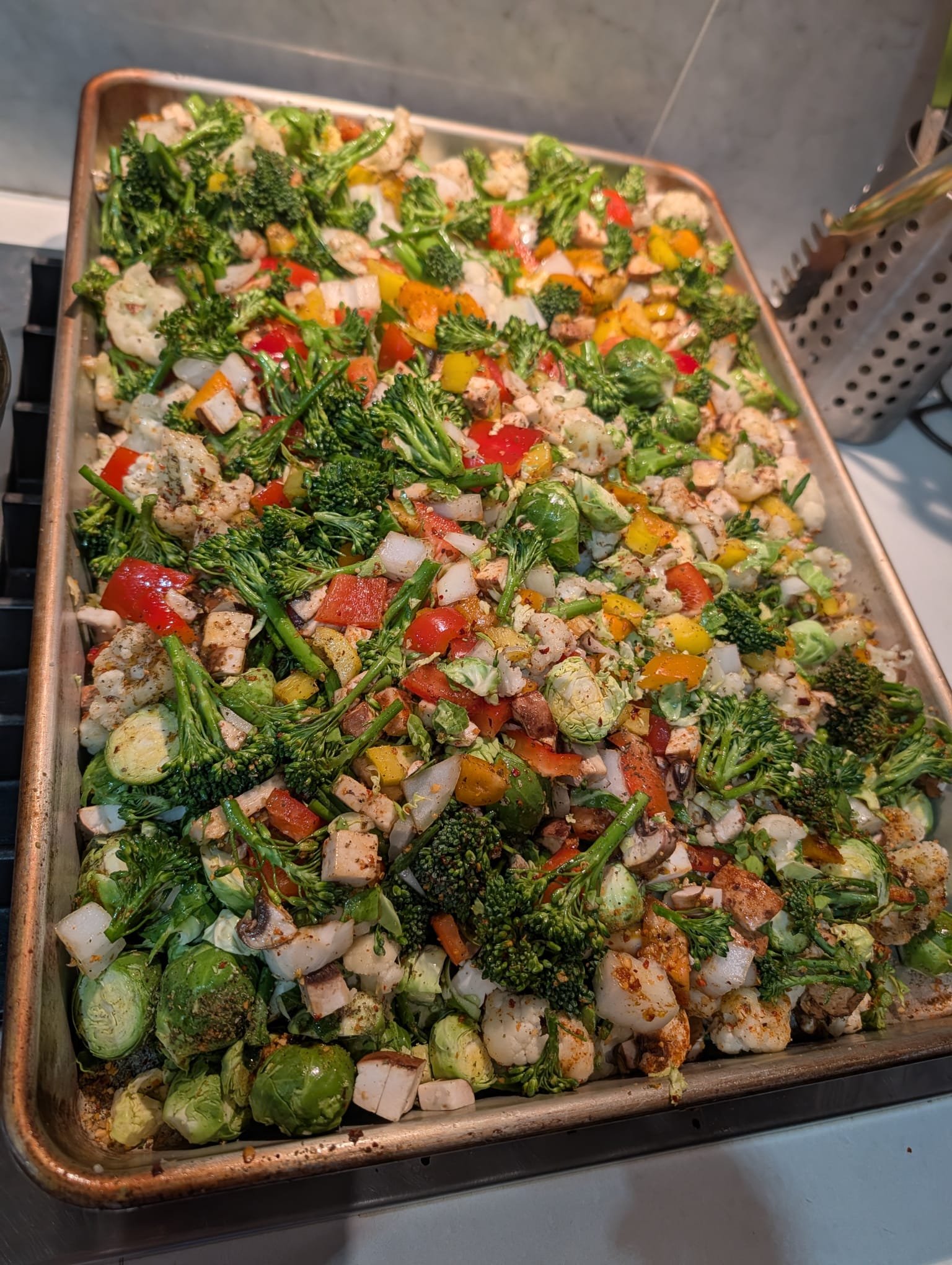
Simple and flavourful base for your meals.
It is 5:45 PM on a Tuesday.
You have just walked through the door. You are thinking about the stack of work emails, a useless meeting, crap weather and how no one else seems to know how to drive or walk… (except you), and the physical fatigue from the deadlifts you did yesterday here at the gym. You are biologically depleted. Your blood sugar is dipping and you feel like you are crashing.
And then, the question hits you. It might come from a spouse, a child, or just the silence of your own kitchen:
What’s for dinner?
In that moment, your kitchen is not a place of joy; it is a hostile environment. You open the fridge. You stare at the components of a meal. Like a bag of mixed Lego with no instructions or pictures.
The math starts happening. If I defrost this, it takes 20 minutes. Then I have to chop onions. That is another 10. By the time we eat, it will be 7:30 PM. I am too tired. Let us just Door Dash it.
We see this scenario play out with our members constantly. We discuss PRs, mobility, and dealing with injuries on the gym floor, but the battle for your health is often lost in that specific 15 minute window of panic between entering your home and the first bite of food.
We want you to look at this from a different angle. We aren’t going to talk about meal prepping today as a way to get abs, though that is a nice side effect. We want to talk about meal prepping as the - and I’m going to bold this for you - single most effective stress management tool you have at your disposal.
We are going to look at the physiology of stress, the cold hard mathematics of your time, and some methods that will buy you back your time and sanity.
The Physiology of the Rush
Let us get scientific for a moment. When you rush home, frantic to throw a meal together while hungry, your body is operating within the Sympathetic Nervous System. This is your fight or flight state.
Evolutionarily, this state is designed to keep you alive. It’s not looking at your long term health. In 2025, it is triggered by traffic jams and the pressure to feed a family. When you are in this state, your body floods with cortisol (the primary stress hormone) and adrenaline.
Here is the biological kicker: Digestion requires the exact opposite state.
Digestion happens optimally in the Parasympathetic Nervous System—the rest and digest state. When you cook frantically, eat standing up, or inhale food while stressed about the mess you are making, you are asking your body to process nutrients while it is chemically preparing for battle.
This leads to poor nutrient absorption, and a signal to the body to store visceral fat which is particularly sensitive to cortisol.
By treating dinner as a daily emergency, you are keeping your cortisol levels chronically elevated into the evening. This disrupts your circadian rhythm, making it harder to fall asleep, which hinders your recovery from your workouts. It is a vicious cycle. You train hard to get healthy, but your kitchen routine is keeping you stressed and messing with your digestion and sleep.
The Mathematics of the Kitchen: A Time Audit
The number one objection we hear is, "I do not have time to meal prep."
We are fact based people. We like numbers and yes we are better at “bar math” but lets take a look at the math of cooking every night versus cooking once.
The Daily Method
If you cook a standard healthy dinner (protein, starch, vegetables) every night from scratch, here is the breakdown:
Mental Planning & Fridge Staring: 5 minutes
Prepping/Chopping: 15 minutes
Active Cooking Time: 20 minutes
Cleanup (Pots, pans, cutting boards, stove): 10 minutes
Total: 55 minutes per day.
Weekly Total (Monday to Friday): about 5 hours (and this isn’t even including Saturday and Sunday)
The Batch Method (The Logic Model)
Now, let us look at cooking that same volume of food on a Sunday afternoon.
Planning: 10 minutes
Prepping/Chopping: 30 minutes
Active Cooking Time: 60 minutes
Cleanup & Food Packing: 20 minutes
Weekly Total: about 2 hours.
The Result: By meal prepping, you are not spending time; you are buying back 3 hours of your life every single week.
Imagine what you could do with an extra 156 hours a year. That is about four full work weeks of free time found simply by consolidating.
The Psychology of Decision Fatigue
Your brain has a finite amount of executive function fuel each day. Every time you make a choice, whether to hit snooze, what email to answer first, or which route to drive, you burn a little bit of that fuel.
By 6:00 PM, your tank is empty. You are experiencing decision fatigue. This is why you are most likely to make poor dietary choices in the evening. Your brain simply refuses to process the pros and cons of broccoli versus pizza. It wants the path of least resistance.
When you have to invent dinner every night, you are forcing your exhausted brain to perform a complex task. Now ask it to make it a healthy dinner that keeps you on your weight target plan and it gets overwhelming.
Meal prepping is the act of making one decision on Sunday to save yourself from making up to 21 decisions during the week. When you open the fridge on Wednesday night and see a container of grilled chicken and roasted sweet potatoes, you do not have to think. You just have to heat and eat. You are automating your nutrition, leaving your willpower intact for things that actually matter like your family, your hobbies, or hitting that heavy squat session tomorrow.
The Solution: The Big Batch Method
We do not want you to become a gourmet chef every night. Complex recipes are the enemy of consistency. We want you to treat your nutrition like a system.
We use the Big Batch Method.
Instead of trying to cook three different things and juggle pans like a circus performer, we make one large, high quality meal on Sunday that covers our dinners for the week.
Think about foods that actually taste better the longer they sit. Chilis, stews, curries, and bowls. These meals allow the flavors to marry and settle. By Wednesday, your dinner actually tastes better than it did on Sunday.
Here is why this wins:
One or Two Pots: You usually only dirty one or two major pots/pans or a slow cooker.
One Cleanup: You wash that pot on Sunday. You are not scrubbing pans on Tuesday night when you are exhausted.
Zero Thinking for the rest of the week: You do not need to assemble components. You just scoop and heat.
The Assembly: Tupperware Tetris
Once your big batch meal is cooked and cooled (cooling is important to prevent bacteria), it container time! Glass is best but anything will do. (We like glass because you can see what’s inside and it doesn’t hold on to grease like plastic).
You have two moves here. You can either portion it all out into individual containers on Sunday, or you can keep it in one large container and scoop it out night by night. Pre portioning it on Sunday can stop you from negotiating with yourself on Wednesday about how big a scoop you deserve. On the other hand, scooping as you go can help you adjust portions as you go if you don’t need as much one day (bigger lunch etc.) and learn to adapt.
The Hidden Benefit: Portion Reality
We need to address one final, uncomfortable truth. Most people have no idea how much they are eating.
We are biologically wired to underestimate our caloric intake. If you are scooping pasta out of a pot onto a plate while hungry, you will likely serve yourself 30% to 40% more than a standard serving size.
When you meal prep using the Big Batch Method, you have a moment of objective clarity. You can look at the container and say, That is one serving. You are not fighting your hunger hormones in that moment. You are portioning with your rational brain, not your lizard brain.
This does not mean you need to weigh every gram of food, but the simple act of pre portioning creates a guardrail for your nutrition. It prevents the accidental overeating that stalls progress.
Reclaiming Your Evenings
Imagine this new Tuesday reality:
It is 5:45 PM. You walk through the door. You are tired. You are hungry. You ask yourself, What is for dinner? You open the fridge. You see a stack of containers filled with a hearty, healthy stew. You grab one. You pop the lid. You put it in the microwave for two minutes.
In those two minutes, you change into comfy clothes. The microwave beeps. You sit down and eat a hot, nutritious meal that supports your training. It is 6:00 PM. You are fed. The kitchen is clean because you cleaned it on Sunday. The dishwasher is empty.
You have the entire evening ahead of you. Your cortisol is dropping. Your recovery is beginning.
This is not just about food. This is about self respect. It is about acknowledging that your time and your peace of mind are valuable resources that need to be protected.
At Thunder & Lightning, we train to be better at life, not just better at lifting weights. But you cannot out train a chaotic lifestyle. The discipline you show under the barbell should extend in to your kitchen.
Start small. Plan ahead. Start before you do your groceries. Pick a meal you want to try, then this Sunday, or any day of the week you can put two hours aside for, cook one big batch of something healthy. Your future self will thank you.
Save stress and over 3 hours/week by planning ahead.
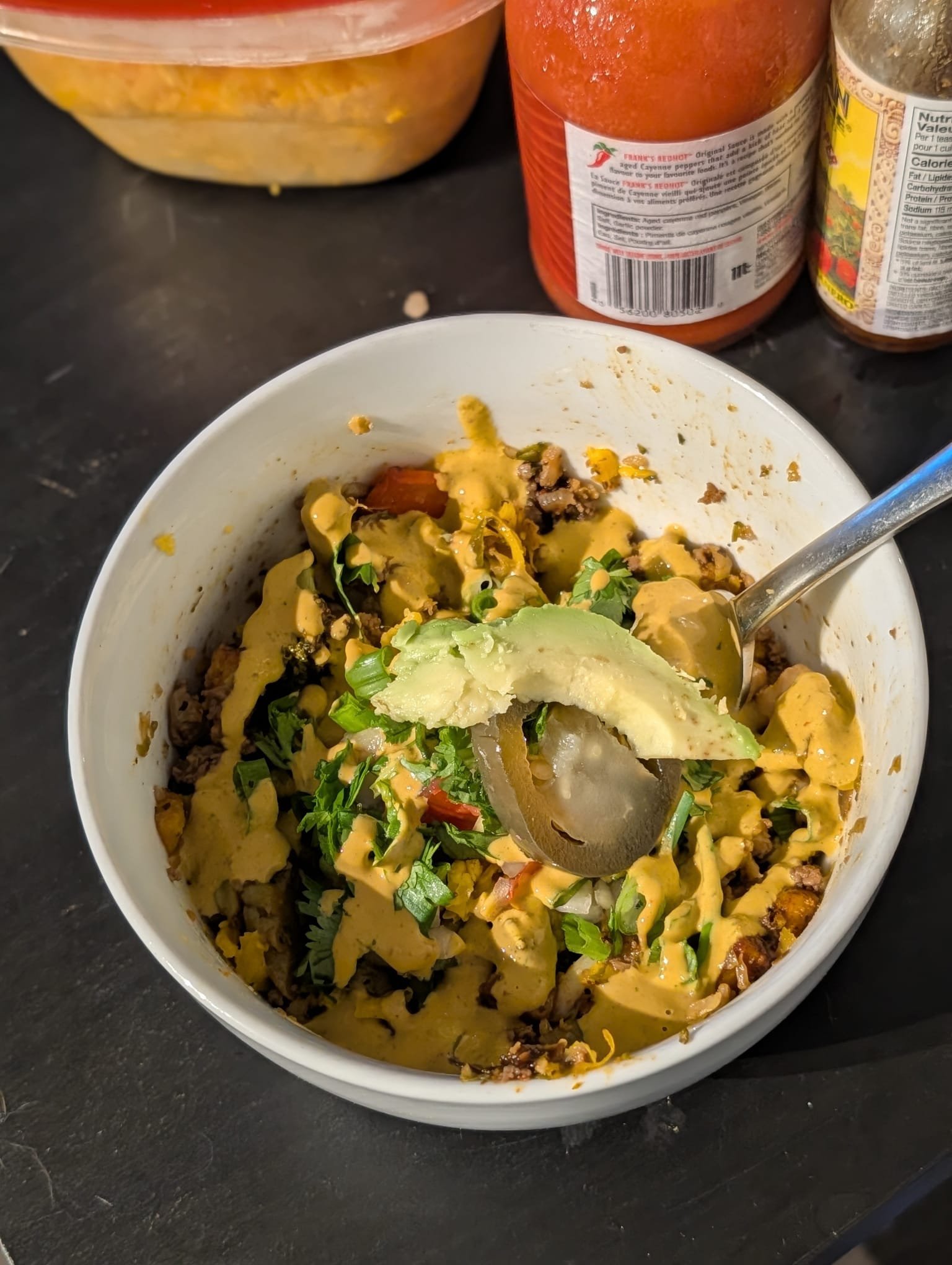
Full of flavour and nutrition!
To get you started, we have put together a recipe for one of our favorite Big Batch meals that is high in protein and vegetables, easy to make, and tastes amazing!
Beef Fiesta Bowls
Ingredients
Potatoes & Veg
5 medium Sweet Potatoes
Lots of other veggies. We are using full Costco bags for anything saying bag:
Bag Brussels
Bag Cauliflower
Bag Broccoli
12-15 Mushrooms
6 Coloured Peppers
3 Large Onions
3 tsp garlic powder
3 tsp smoked paprika
Salt & pepper to taste
Olive oil
Beef
3 lb (680g) lean ground beef
1 small/medium onion, diced
2 packet or aprox 2-4 TBSP taco seasoning
½ cup beef or vegetable stock
Toppings
½ cup fresh guacamole
½ cup pico de gallo (tomatoes, onions, jalapenos, lime juice, salt)
Pickled jalapeños (optional)
Green onions
Cilantro
Fiesta Sauce
½ cup non-fat Greek yogurt
1 chipotle pepper in adobo + 1 tsp adobo sauce
½ roasted red bell pepper (or 2 jarred pieces)
1-2 tbsp lime juice
½ tsp honey (or agave)
Handful fresh cilantro
Pinch of salt
Blend until smooth and bright
Directions:
Roast veggies on a large, high walled baking tray with olive oil, salt and pepper or any vegetable seasoning. (~45 min at 425°F (220°C)
Air fry or roast potatoes at 425°F (220°C) with garlic, paprika, salt, pepper + oil spray until crispy (20-25 min).
Brown beef + onion in a frying pan. Stir in taco seasoning + beef stock, simmer once cooked 3-4 min.
Build bowls: vegetables + sweet potatoes + beef + a bit of toppings (guac + pico + jalapeños + cheddar cheese).
Drizzle with Fiesta Sauce and enjoy!
Are you training hard but feeling like your nutrition or lifestyle stress is holding you back?
We specialize in helping people build sustainable, healthy lives that function in the real world. We would love to sit down with you, look at your goals, and build a plan to get you there.