
Strong Bodies Are Resilient Bodies
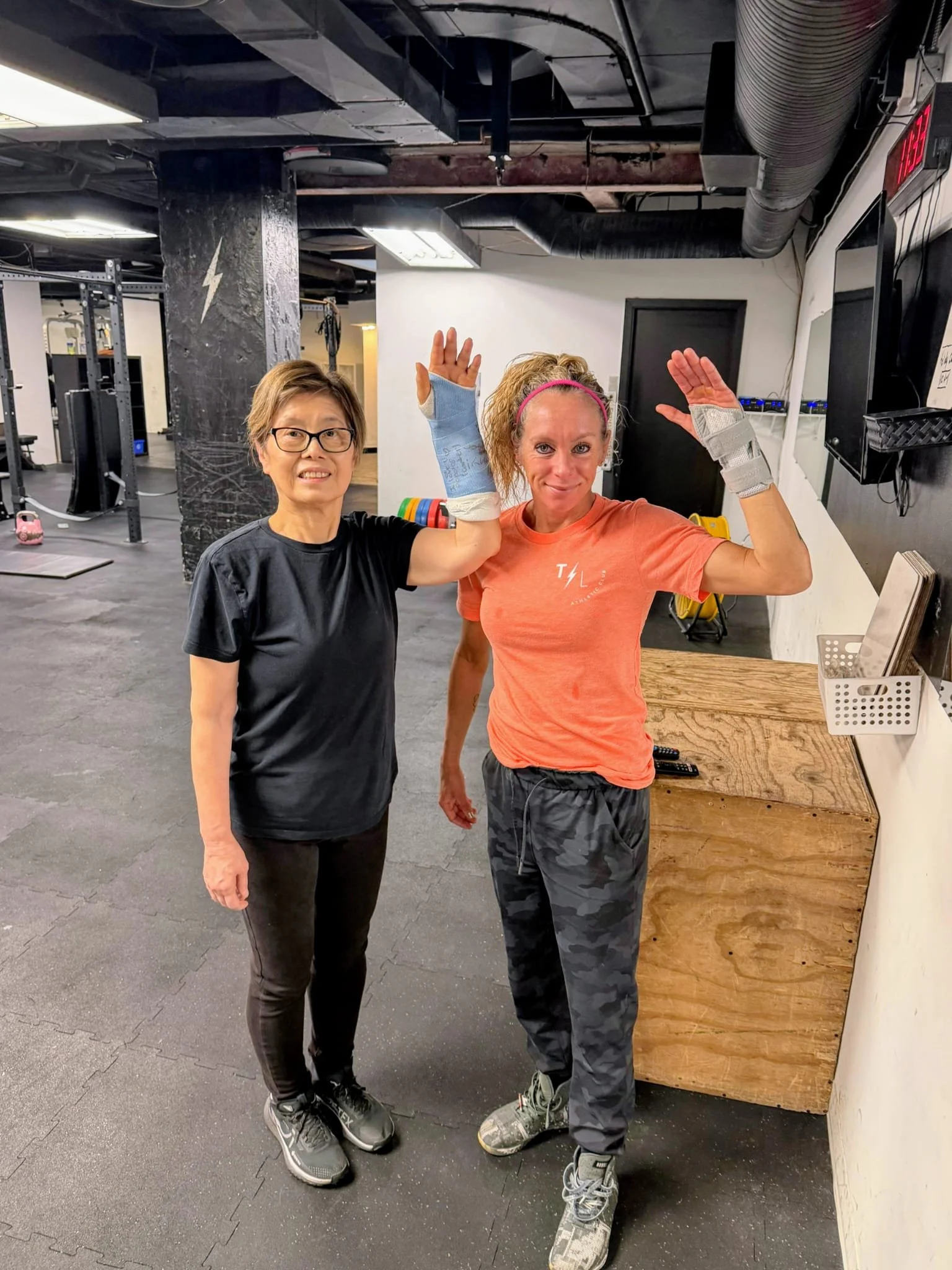
Don’t let an injury stop you from your progress and your health.
A few months ago, one of our members broke her wrist.
Helena has been training with us for over two years. She is stronger than she has ever been, moves better than she did when she started, and has the energy to keep up with her kids, her grandkids, and everyone else she takes care of. She is also, as of recently, the proud owner of a cast on her arm.
That didn’t stop her from training.
She showed up. She adapted. She worked around it. And because of the foundation she had built over two years of consistent training, she was able to make it work and she is maintaining her strength instead of losing it while she heals.
That is preparation and resiliance. And it is one of the most underrated reasons to train consistently.
Resilience Is Built Before You Need It
Most people think about fitness in terms of how they look or how they perform on a good day. What they do not think about is how their body holds up on a bad one.
The wrist that breaks cleanly and heals quickly is not the same as the wrist that breaks badly and takes months to recover from. The difference is often the surrounding tissue. Muscles, tendons, and ligaments built through consistent training absorb and distribute force differently than those that have not been trained. Bone density, which increases with resistance training, affects how severely a bone breaks and how quickly it knits back together.
The research on strength training and injury resilience is substantial. Trained individuals consistently show faster recovery times, less severe injuries under the same circumstances, and better outcomes from surgery when it is required. The work you do in the gym is not just shaping how you look. It is building the physical buffer that protects you when something goes wrong.
Resilience is not something you find when the crisis arrives. It is something you build in the years before it does.
Consistency Is the Protection
Here is what two years of showing up actually gave Helena.
It gave her muscle mass that supports her joints and absorbs impact. It gave her bone density that influenced how her wrist broke and how it will heal. It gave her body awareness and movement quality that allowed her to adapt her training immediately rather than shutting down entirely. And it gave her a coach who knows her body well enough to program around the injury safely.
None of that would have been available to her if she had only recently started training, or if she had been training inconsistently. The protection that consistency builds is cumulative. It compounds over months and years in ways that are not always visible until the moment you actually need it.
This is one of the most honest arguments for showing up even when you do not feel like it, even when life is busy, even when the sessions feel unremarkable. You are not just training for today. You are building the foundation that will protect you when today is a bad one.
Training Around an Injury Is Possible With the Right Coach
The other thing Helena's situation illustrates is what good coaching actually makes possible.
Without a coach, a broken wrist means stopping. It means six to eight weeks on the sidelines watching your fitness decline while you wait to heal. That is the default assumption most people have, and it is understandable. If you do not know how to train around an injury, you do not train.
With a coach who knows your body and understands how to program intelligently, an injury becomes a detour rather than a full stop. Helena is still training her lower body. She is still working her core. She is doing single arm work on her uninjured side. Her cardiovascular fitness is being maintained. Her habit of showing up is intact.
By the time her cast comes off, she will not be starting over. She will be resuming.
This is what training with a coach provides that training alone does not. Not just better programming on a good day, but the ability to navigate the bad ones without losing everything you have built.
Consistency is protection.
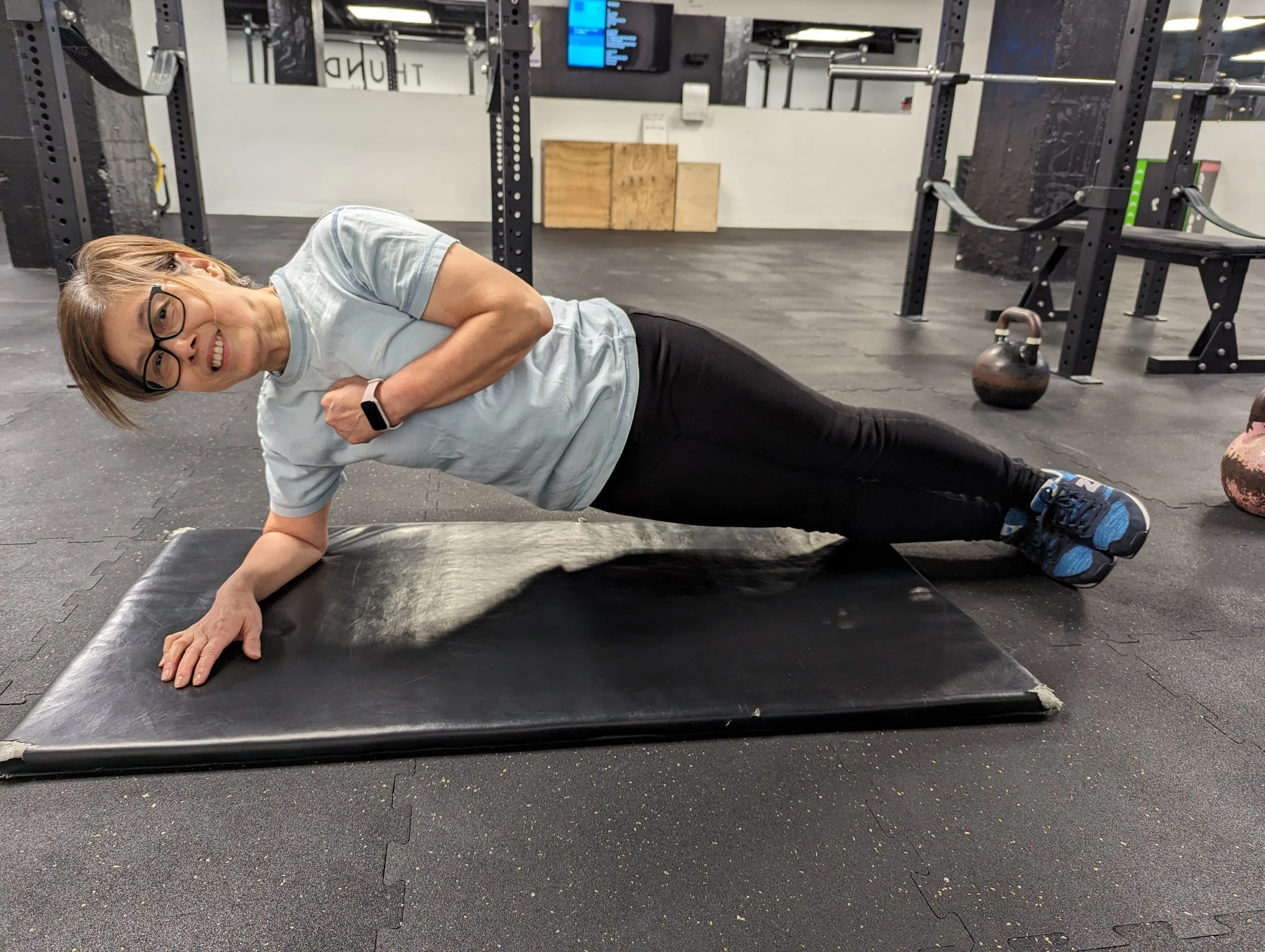
Strength equals resilience.
What This Means for You
You do not need to have a broken wrist to take something from this.
Life throws curveballs at everyone. Injuries happen. Surgeries happen. Demanding seasons at work happen. Family situations happen. The people who come through those periods with their fitness intact are not the ones with the most willpower. They are the ones who built enough of a foundation beforehand that they had something to protect, and who had support around them that knew how to help them protect it.
Start before you need it. Show up even when it feels unremarkable. Build the foundation now so that when life gets complicated, and it will, you are not starting from zero.
Strong bodies are resilient bodies. And resilient bodies are built one consistent session at a time.
Take the Next Step
If you are ready to start building a foundation that holds up when life gets hard, let's talk. Sit down with us for a free No-Sweat Intro, where we will go over your goals and design a strategy that works for you.