
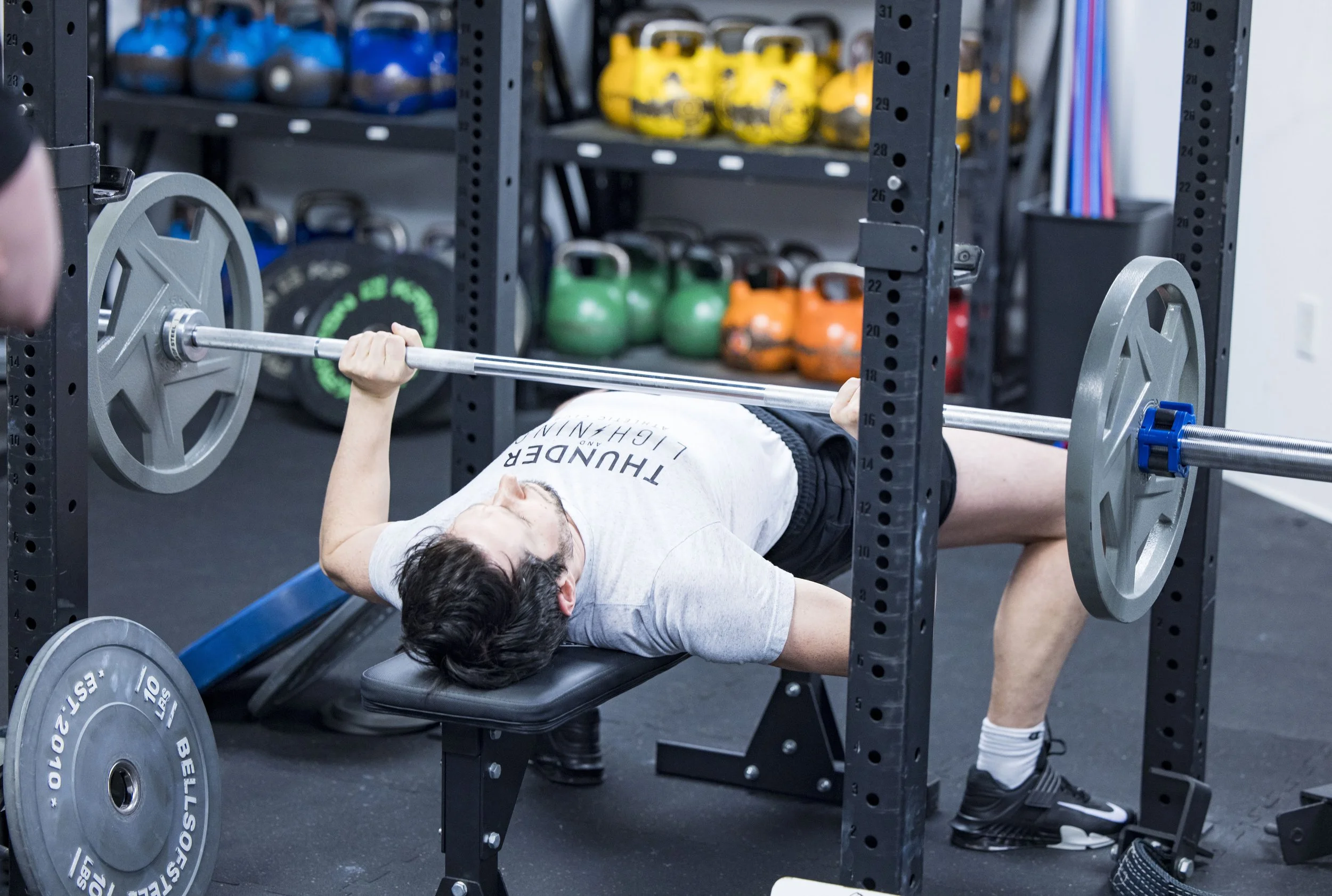
You’re not stiff because you’re getting older, you’re just moving less.
We hear this regularly at the gym.
A member rubs their shoulder or massages their hip and sighs, "I must be getting old."
It is the universal excuse for stiffness, aches, and the inability to move like you used to. We have accepted that once you pass 30 or 40, your body is supposed to stiffen up like a rusted hinge.
But what if we told you the calendar isn't the problem?
The reason you feel stiff isn't because you are aging. It is because you stopped moving.
The "Fuzz" Effect
To understand stiffness, you have to understand connective tissue (fascia).
Think of fascia like an internal sweater that wraps around your muscles. Every night when you sleep, your body builds up a little bit of "fuzz" (coined by anatomist Gil Hedley) between your muscle layers. This is normal. In a healthy, hydrated state, this tissue acts as a slide and glide mechanism, facilitating movement.
When you wake up and do a big morning stretch, you are physically melting that fuzz. You are sliding the tissues back and forth so they can move freely.
But if you sit at a desk for 8 hours, then sit in a car, then sit on the couch, you never melt the fuzz.
Over weeks, months, and years, that fuzz solidifies. This tissue can accumulate and become dense, turning into adhesions. Your muscles literally get glued together.
That stiffness you feel isn't age. It is accumulated lack of movement.
Your Body is a Casting Mold
Your body is an incredible adaptation machine. It constantly changes its shape to match what you do most often.
If you sit in a chair all day: Your hip flexors shorten, your hamstrings tighten, and your spine rounds forward. Your body says, "Oh, we are a chair-shaped person now," and it lays down tissue to support that shape.
If you look down at a phone all day: Your neck muscles shorten and your shoulders roll forward.
You aren't "getting old." You are getting stuck in the position you spend the most time in.
Motion is Lotion
If you want to feel young, you have to move your joints through their full range of motion.
Walking is great, but it isn't enough. Walking only uses a small range of motion in your hips and knees. It doesn't move your spine, your shoulders, or open your hips fully.
To break the cast, you need to:
Squat: Take your hips and knees through a full range. Use a bar, dumbbell or kettlebell.
Press: Get your arms over your head. Push Press and Barbell Shoulder Presses.
Hinge: Bend forward and lengthen your hamstrings. Deadlifts and Goodmornings.
Hang: Just like it sounds, get on a pull up bar and just hang out. Keep some weight on the floor if you need to.
The reason you feel stiff isn't because you are aging. It is because you stopped moving.
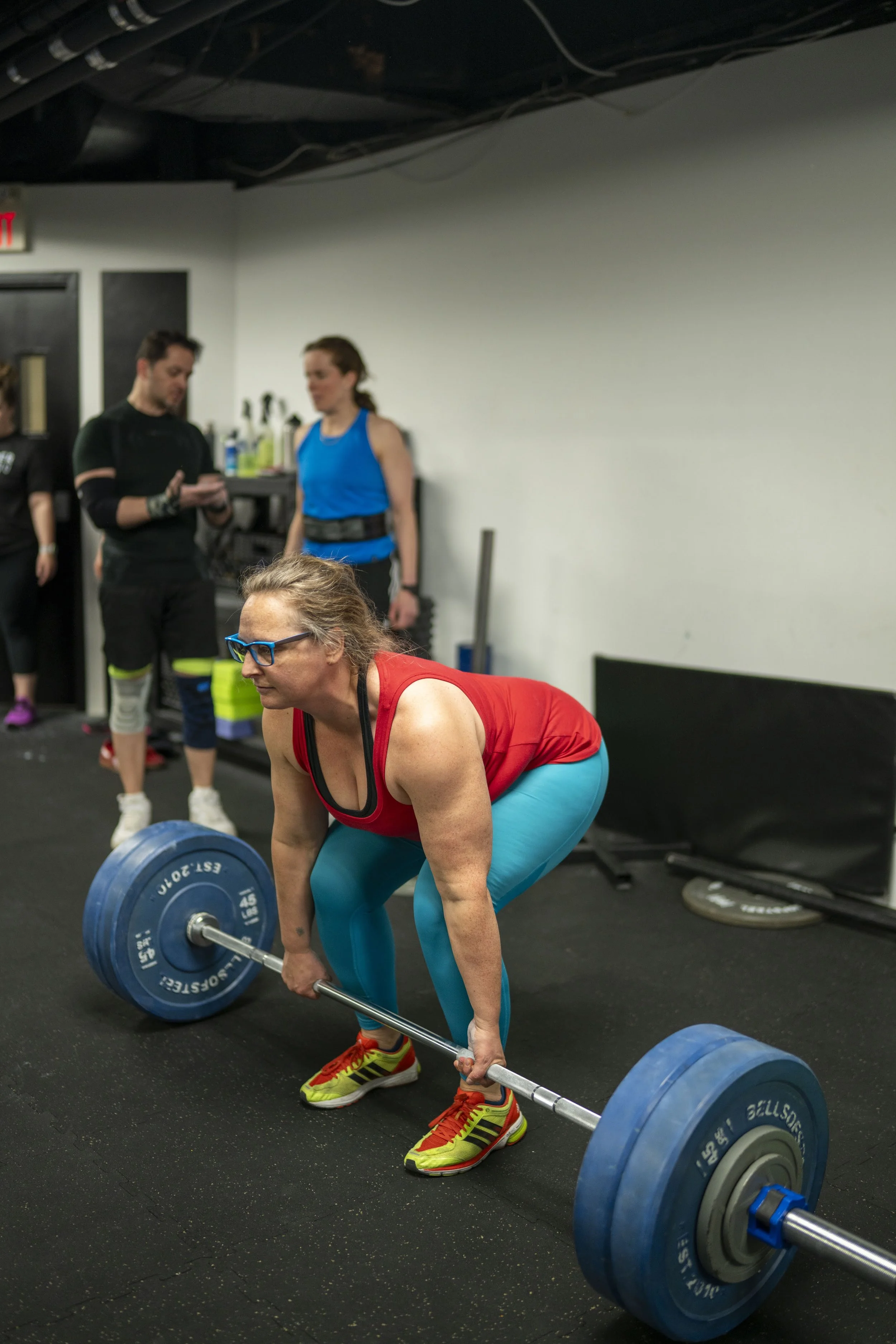
Lift heavy things and push your limits for the best health.
The Good News
The best part about this is that it is reversible.
Unlike aging , which you can't stop, stiffness is something you can fix. You can re-model your tissue.
It doesn't happen overnight. If you have spent 10 years sitting in a chair, it will take time to undo the casting. But if you start moving your joints through full ranges of motion, squatting, lunging, pressing, pulling… your body will adapt.
The rust will break off. The fuzz will melt. And you will realize you weren't old. You were just rusty.
Take the next step
If you are tired of feeling stiff and are ready to reclaim your movement, let’s talk. Sit down with us for a free No-Sweat Intro, where we will go over your goals and design a strategy that works for you.