
Why Strength Training Looks Different for Women Over 35 (And Why That's a Good Thing)
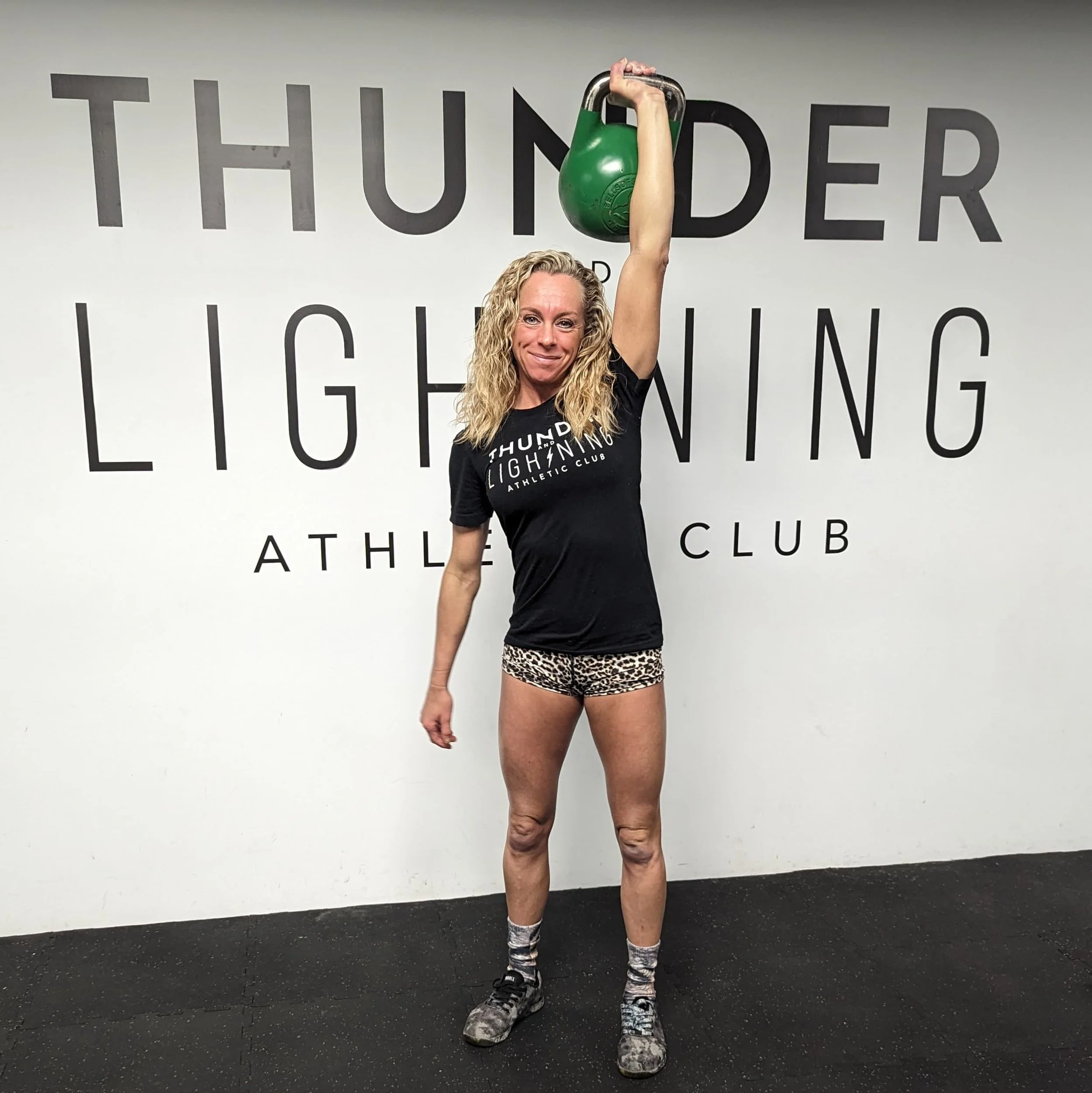
Strength training is the difference in aging and declining or aging and getting better.
Most women who walk into Thunder & Lightning for the first time underestimate themselves by a significant margin. Not because they aren't fit or aren’t strong. Because nobody has ever put a serious barbell in their hands and shown them what they are truly capable of.
That changes fast! Within a few months most of them are lifting weights they wouldn't have believed possible when they started. The potential was always there. They just needed the right place with the right people to give the a nudge.
We coach a lot of women over 35. It is one of the demographics we know best and care about most. Teri-Lynn is 40, trains seriously, and coaches these women from a place of genuine understanding. When she tells a member that what they are feeling is normal, or that what they are capable of is more than they think, she is speaking from experience on both sides of that conversation.
What we have learned coaching women in this age group is that almost everything they were taught about fitness was wrong for them. Not wrong in general. Wrong for them specifically, at this stage of life, with the goals they actually have and the body they are actually in.
What Actually Changes After 35
The body changes after 35. That is not a reason to train less. It is a reason to train smarter and more specifically.
Muscle mass begins declining in your 30s at a rate of roughly three to five percent per decade without intervention. This is called sarcopenia and it accelerates with age if nothing is done to stop it. Less muscle means a slower metabolism, less strength, and a body that becomes progressively harder to maintain regardless of how carefully you eat. We see this in the women who come to us having done everything right by the standards they were given, eating carefully, doing their cardio, staying active, and still feeling like their body is changing in ways they can't control. That feeling is real. And it has a specific cause.
Bone density follows a similar pattern. Peak bone density is typically reached in your late 20s and begins declining after that. For women the decline accelerates significantly around perimenopause as estrogen levels drop. Estrogen plays a direct role in bone maintenance and strength training is the most effective thing you can do to prevent it. For women over 35 it is genuinely important in a way that most people aren't told clearly enough.
Hormonal shifts also affect body composition directly. As estrogen declines the body tends to shift fat storage toward the abdomen. Muscle tissue counteracts this by improving insulin sensitivity and supporting the hormonal environment that keeps body composition stable. More muscle doesn't just make you look better. It makes your body work better at a hormonal level. It changes how women think about what they are training for.
None of this is inevitable in the way most people assume. The women who build and maintain muscle mass through their 30s, 40s, and 50s age differently. Not just in how they look but in how they move, how they feel, and what their bodies are capable of.
Why the Cardio Approach Most Women Were Taught Doesn't Work Anymore
Most women who grew up in the 80s and 90s were taught a very specific version of fitness. Cardio is good. Weights make you bulky. Stay lean by eating less and moving more. The goal is to be smaller.
That framework wasn't designed around women's health. It was designed around a particular aesthetic ideal and it has done a significant amount of damage to how women relate to their bodies and their training.
Cardio supports cardiovascular health, improves mood, and burns calories during the session. For women over 35 those benefits are real and worth having. But cardio can't build muscle. It can't protect bone density in any meaningful way. It can't improve the hormonal environment the way resistance training does. And it can't produce the body composition changes that most women over 35 are actually looking for, the ones that come from having more muscle rather than simply weighing less.
We see this pattern constantly. Women who have been doing cardio for years, sometimes decades. Fit in a cardiovascular sense. Feeling like they are doing everything right. And frustrated because their body isn't responding the way it used to and they can't figure out why.
The answer is almost always that they have been training for endurance in a body that is asking for strength. The two aren't the same thing and at this stage of life the distinction matters enormously.
Strength training gets better with time. And So do you!
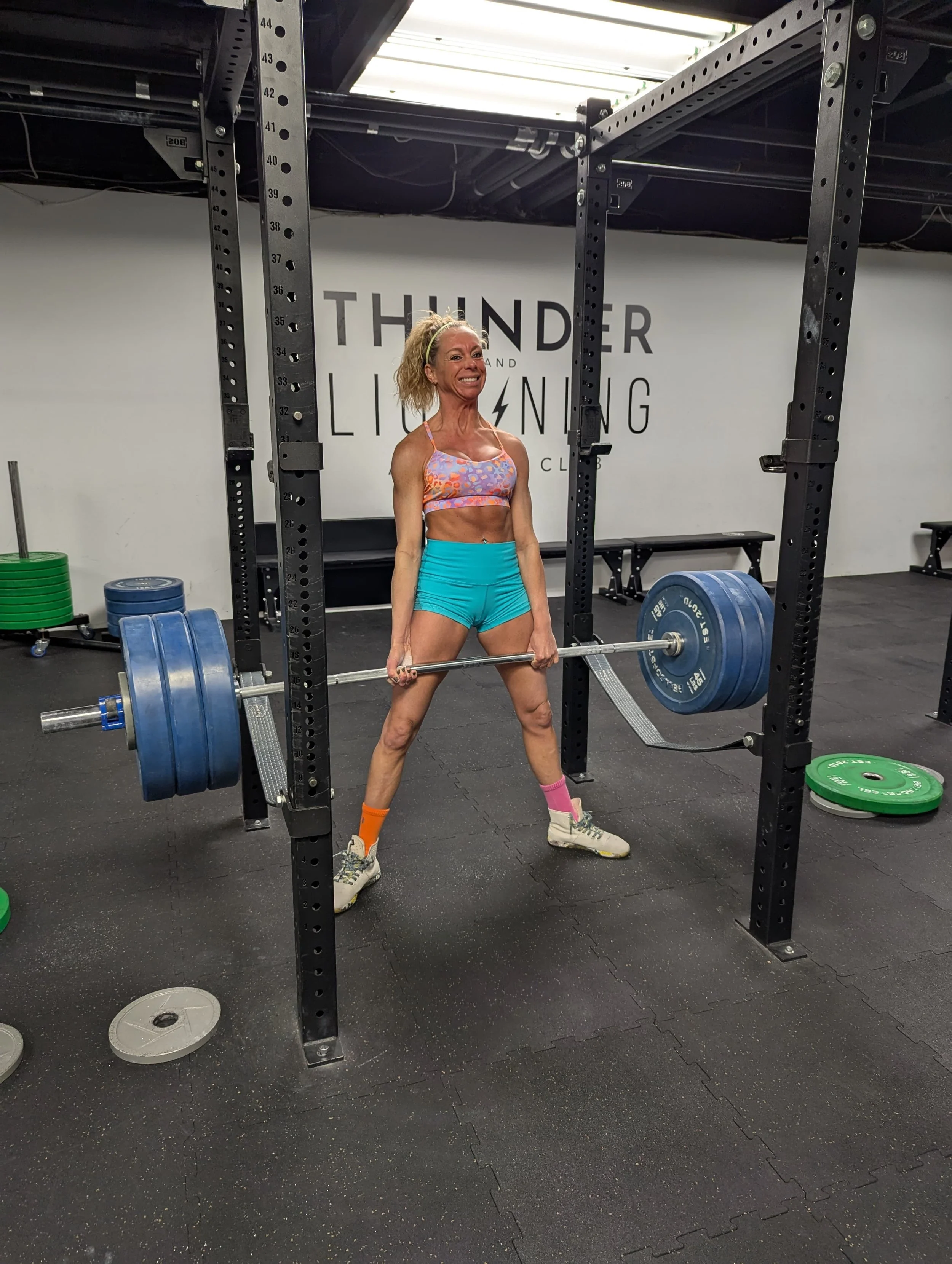
The answer is lifting heavy weights.
What Strength Training Actually Does for Women Over 35
The women who come to Thunder & Lightning at 35, 40, 45, and beyond and commit to serious strength training consistently surprise themselves. The strength gains in this demographic are real and they come faster than most women expect. A woman who has never seriously lifted before has significant adaptation available to her, and the early months of coached strength training produce changes that are visible, measurable, and genuinely motivating.
What changes isn't just the numbers on the bar. It is the relationship with the body itself.
Women in this age group often arrive carrying years of frustration about what their body won't do. They have been fighting it, restricting it, trying to make it smaller or different or more compliant. Strength training flips that relationship. The goal stops being about what the body looks like and starts being about what it can do. And when you start measuring yourself by what you can lift rather than what you weigh, something shifts that goes well beyond the gym.
We watch women in their late 30s, 40s and 50’s lift weights they wouldn't have believed possible six months earlier. We watch them walk differently. Carry themselves differently. Talk about their bodies differently. We see it in the women we coach every week.
That is what serious strength training does for women at this stage of life. It doesn't just change the body. It changes the their perception of themselves.
What This Looks Like in Practice
Strength training for women over 35 doesn't need to be extreme. It needs to be consistent, progressive, and coached well.
Two to three sessions per week is enough to produce significant results. At Thunder & Lightning the programming for women in this demographic is built around the foundational barbell movements, squat, deadlift, press and row, loaded progressively over time. We pay specific attention to how training volume and recovery interact to ensure we continue to progress instead of producing fatigue.
What we don't do is scale things down because of age. We scale things appropriately because of where someone is right now. There is a difference. The women who train with us at 45 are not doing a gentler version of real training. They are doing real training with a coach who understands what their body needs to respond well to it.
The women who start this in their late 30s and stay consistent through their 40s describe the same thing. They are stronger at 45 and 50 than they were at 30. Not despite the years. Because of what they did with them.
That is the thing nobody told most women about strength training. It gets better with time. You get better with time. The strength that surprises you at the beginning is just the start of what's possible.
Take the Next Step
If you are ready to find out what serious strength training can do for you at this stage of life, let's talk. Sit down with us for a free No-Sweat Intro, where we will go over your goals and design a strategy that works for you.