
Powerlifting Meet Day: How to Compete Smarter on the Platform
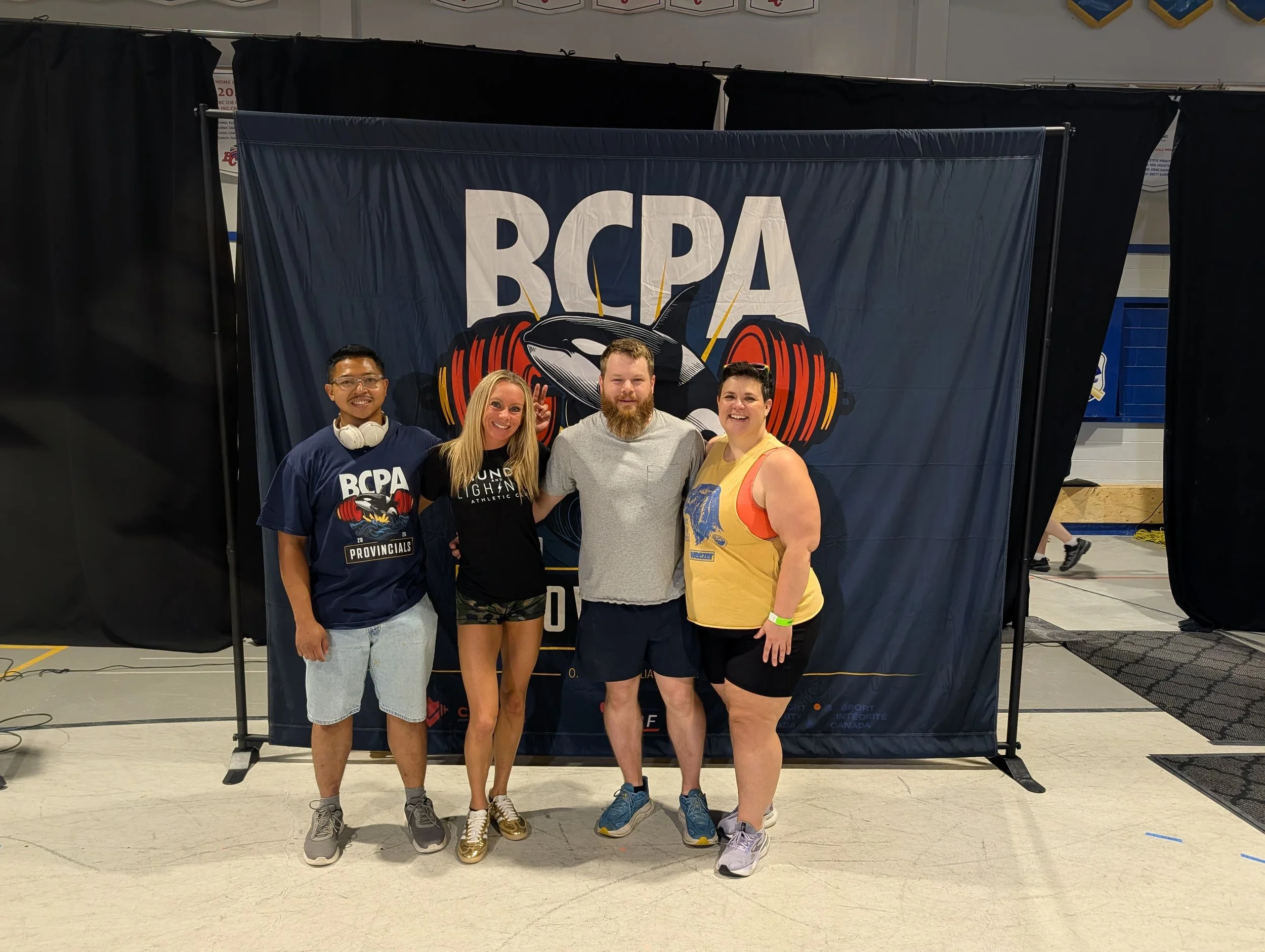
Experience and education on powerlifting meets helps you lift more, without necessarily being stronger.
Your first meet is about surviving. Your second and third meets are about learning. But at some point the goal shifts from just getting through the day to actually competing well, and that requires a different approach to meet day than most lifters ever develop.
After coaching athletes through BC powerlifting meets for years, the mistakes we see most often aren't about strength. They're about decisions. Specifically, four decisions that experienced lifters get wrong more consistently than they should.
Mistake One: Incorrect Rack Heights
This one is preventable and we still see it derail lifters on meet day.
Your squat rack height and your bench pin height need to be confirmed on competition equipment before you lift, not guessed at based on what you use in training. Most people train on one rack their entire preparation and have no idea how their heights translate to the equipment at the meet venue. The settings are not universal.
Get to the venue early enough to check your rack heights during equipment check and warm ups. Write them down before meet day and bring that piece of paper with you (or keep it in a note on your phone). If you've had the chance to train on similar equipment beforehand, even better.
A squat rack set too high or low means extra energy spent un-racking, or not being able to un-rack even.. A bench rack height too low means difficulty un-racking and getting into your start position, too high, same thing, and if your catch pins are set incorrectly you’ll either hit the before your bench is complete causing a no-lift, or they will be too low for proper safety. These are not small variables on a day when every variable matters.
Mistake Two: Opening Too Aggressively
This is the most common performance mistake we see, and it's almost always preventable.
The problem usually isn't arrogance. It's that the lifter chose their opener in training, felt strong leading into the meet, and stuck with that number regardless of how the warm-up room actually felt on the day.
Here's how we use warm-ups, and it's the approach we teach every athlete we coach through a meet.
Your warm-up sets are information. They're not just about getting your body ready to lift. They're about telling you what kind of day your body is having. A warm-up that moves fast and feels light is telling you something. A warm-up that feels heavier than it should is telling you something else. Both of those pieces of information should be factored into your opening attempt.
The way we structure warm-ups is to build progressively toward something close to the opening weight. By the time you're taking your last warm-up at around ninety to ninety-five percent of your planned opener, you have a clear read on whether that opener is the right call, whether you can push the second and third attempts aggressively, or whether you need to adjust.
A conservative opener is not a sign of weakness. It's a strategic decision. Getting on the board with a successful first attempt changes your whole day. You have two more attempts to chase numbers. Missing your opener means you're already behind and your second attempt now has to do two jobs instead of one.
One rule we use: your opener should be a weight you could hit on your worst day of the year. Not a good training day. Your worst day. Because you don't always know which kind of day meet day is until you're already lifting. You should have an approximate weight range for each of your attempts, a low end and a higher end, depending on how you are feeling that day. Your opener might be what your 5RM weight is.
Mistake Three: Not Enough Difference Between Attempts
This one costs lifters more total than almost anything else, and it doesn't get talked about enough.
The jump between your first, second, and third attempts is a strategic decision that deserves as much thought as the opener itself. Too small a jump and you're leaving total on the board. Too large and you're gambling on a number that has no business being on your third attempt.
A general framework that works well: your second attempt should be a realistic goal for the day, something you're confident in but that represents genuine progress from the opener. Your third attempt is your stretch, the number you're chasing if everything goes well. That third attempt should only go up if the second felt good and moved well.
Where lifters go wrong is treating all three attempts as equally conservative, taking small jumps because they're nervous, and finishing the meet having left five or ten kilograms on the board that were absolutely there. Or the opposite, taking aggressive jumps on every attempt because training has been going well, and bombing out on a third attempt that had no business being selected.
If your attempts are too similar in weight, you’ll wear yourself out for your third. But if they are too far apart, your third will also feel heavier than it should, and you won’t be primed for it.
Talk to your coach between every attempt. Have the conversation about the next number before you need to submit it. Don't make that decision alone in the warm-up room.
Mistake Four: Not Following the Judges' Commands
Missing a command is the most frustrating way to lose a lift because the weight was there. The strength was there. And a red light came up anyway.
We see this happen to lifters who have done multiple meets. Not just beginners. The platform does something to your focus that's different from training, and the commands can slip if you haven't drilled them enough to make them completely automatic.
For the squat you wait for the "squat" command before descending and the "rack" command before returning the bar. For the bench you wait for the "start" command, the "press" command at the bottom, and the "rack" command when the lift is complete. For the deadlift you hold the bar at the top until you receive the "down" command.
The most common errors are racking the squat before the rack command, pressing on the bench before the press command, and setting the deadlift down before the down command. All three happen because the lifter has already completed the lift in their mind and their body follows before the judge gives the signal.
The fix is to practise the commands in training until waiting for them is as automatic as the lift itself. Walk through them out loud. Have your training partner give the commands. Make it boring and repetitive until it's completely second nature. Then do it again.
How to Read the Room and Adjust in Real Time
Meet day is not static. The flight moves faster or slower than expected. The warm-up room gets crowded or clears out. Someone ahead of you bombs out and the bar jumps in a way you weren't expecting. The judging standard on depth feels tighter than you've seen at other meets.
Good competitors notice these things and adjust. Here's what to watch for.
Track the bar. Know what attempts the lifters ahead of you are taking and roughly how long each flight is taking per attempt. That information tells you when to start warming up and how many sets you have time for. A flight moving fast means you start earlier. A flight moving slowly means you have more time and can take an extra warm-up set if you need it.
Watch the judging. The first few lifters in your flight will tell you everything you need to know about how strictly the judging standards are being applied that day. If depth is being called tightly, adjust. If the judges are liberal with the rack command timing, note that. You have the opening flight to gather that information before your own attempts.
Talk to your coach between attempts. Not to the person next to you in the warm-up room who wants to tell you about their training cycle. Your coach. Thirty seconds of focused conversation about what you felt on the lift, what the judges saw, and what the next attempt should be is more valuable than anything else you can do in that window.
Successful powerlifting meets are not just about strength, they are also about strategy.
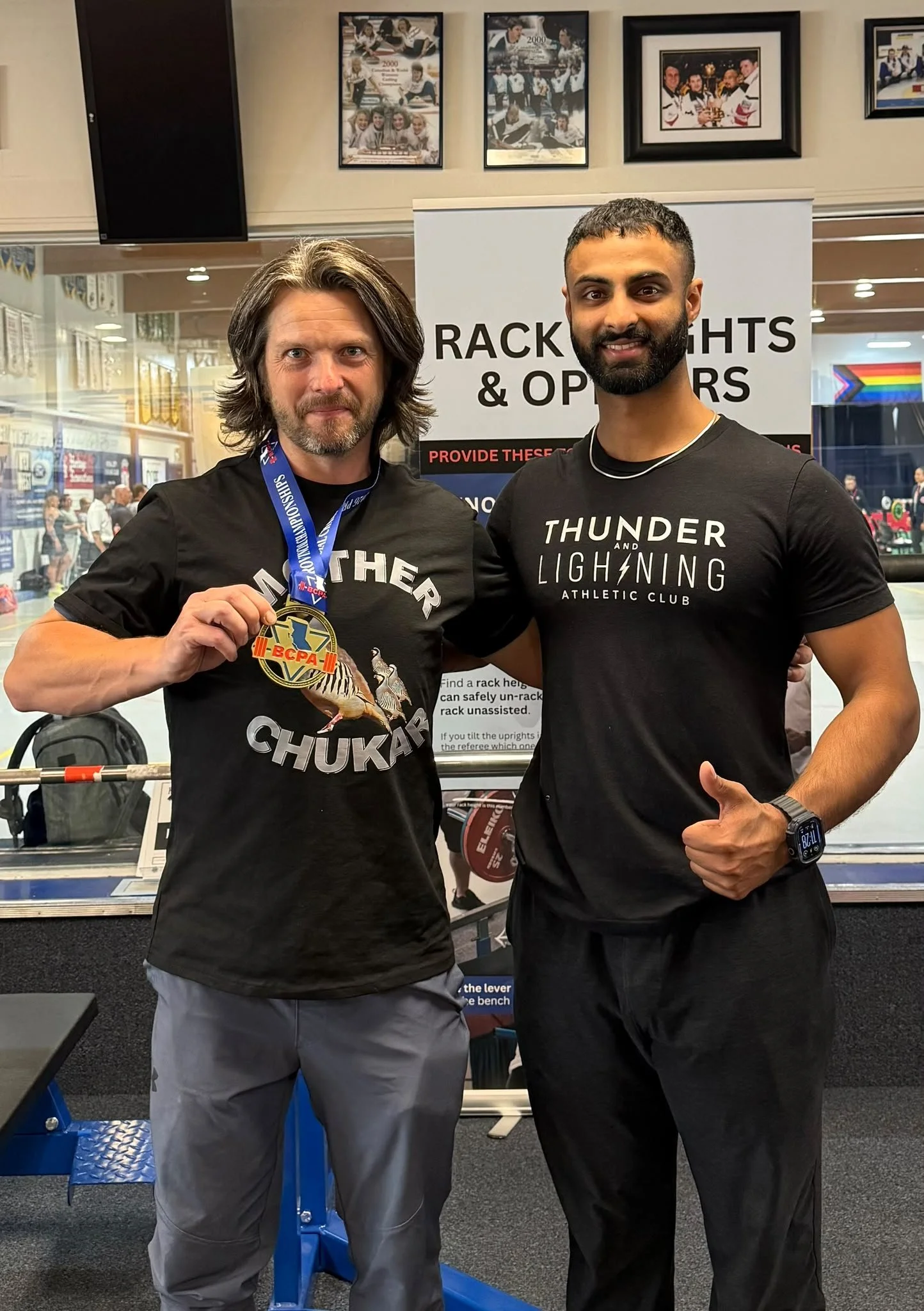
Strategizing before your meet and during will help you have more confidence and success.
What to Do Differently on Meet Day Versus Training
The biggest mental shift required for competing well is accepting that meet day is not a training day and trying to make it feel like one is a mistake.
In training you have unlimited attempts. If a set doesn't go well you rest and take it again. You can miss a lift and move on without consequence. The conditions are controlled and familiar.
On the platform you have three attempts. Each one counts. The environment is unfamiliar, the judges are watching, and there are people in the room. Your nervous system knows the difference even when you think you're relaxed.
This means a few things in practice.
Your meet day warm-up should be shorter and less taxing than your training warm-ups. You're not trying to replicate a training session. You're trying to get your nervous system primed and your technique sharp without burning energy you need for the platform.
Your attempts should be more conservative than your training maxes. A meet total built on three white lights at ninety percent of your maxes is worth more than a meet total built on hitting one personal best and bombing out on the other two.
And your focus between attempts should be on recovery, not on what just happened. Whether the last lift went well or badly, your job between attempts is to breathe, rehydrate, get warm, and be ready for the next one. Replaying a missed lift or celebrating a good one too hard both cost you focus you need for what's coming.
The Bottom Line
Competing well at a powerlifting meet isn't just about being strong. It's about making good decisions under pressure, reading the information the day is giving you, and not letting small mistakes compound into big ones.
The lifters who consistently post strong totals aren't always the strongest people in the room. They're the ones who opened conservatively, used their warm-ups to calibrate their attempts, took smart jumps between lifts, followed every command, and adjusted when the day didn't go exactly as planned.
If you're preparing for a BC meet and want to talk through your attempt strategy or meet day approach, that's exactly the kind of conversation we have with athletes we coach. Come in for a free No-Sweat Intro and we'll work through it together.