
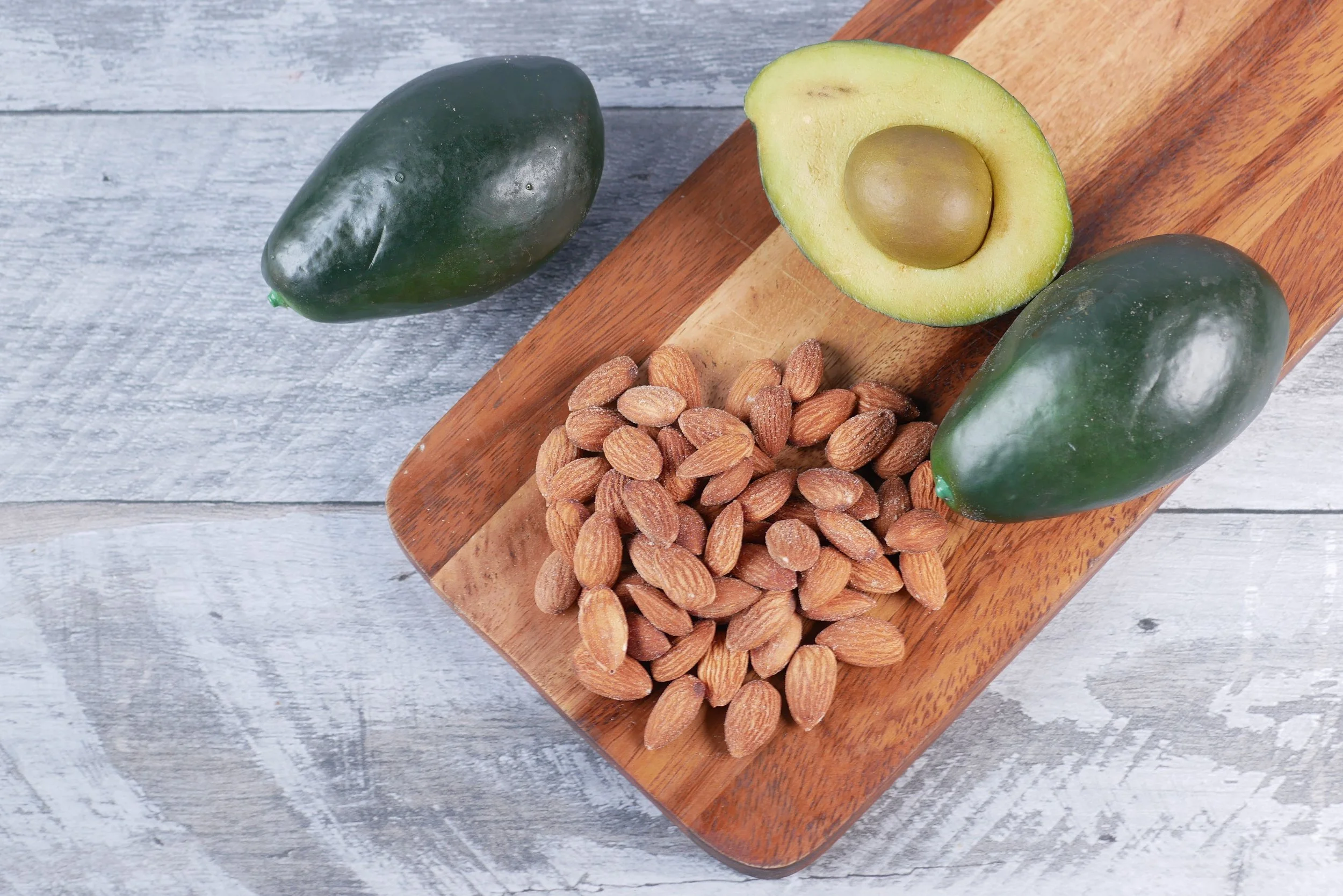
Certain healthy foods are easier to accidentally overeat.
Some of the healthiest food in your kitchen might be what’s slowing you down. Most people who are stuck aren't eating badly. They're eating clean food in quantities nobody warned them about. Nuts, nut butter, avocado, olive oil, smoothies, trail mix. All fine. All very easy to overeat.
None of the foods below are bad for you. We're not telling you to stop eating nuts. But "healthy" and "low calorie" are two completely different things, and that gap is where a lot of people get stuck.
Smoothies
You blend up a banana, a couple of dates, a scoop of peanut butter, some milk, a handful of oats or maybe some granola on top if it's a bowl. Every ingredient is fine. Together it can be around 700 to 900 calories that you drink in four minutes and don't really register as a meal.
Liquid calories don't fill you up the way chewing does. That's a well-documented thing, not a diet-culture myth. You'll be hungry again by 11am and you've already eaten a third of your day.
Dates are where they really get you. They're basically candy. So 1 date has about 65 calories and most smoothie recipes online (or the ones you get from health stores such as Body Energy Club) call for three or four of them. Each date has 16 grams of sugar. That works out to about 4 teaspoons of sugar… per date. So one smoothie with 4 dates has 16 teaspoons of sugar. Picture scooping 16 teaspoons of granulated sugar into your smoothie. That’s crazy if you’re trying to maintain a healthy diet or lose weight.
Nut butter, nuts, and trail mix
Two tablespoons of peanut butter is about 190 calories. Two tablespoons is a lot smaller than what comes out when you're standing at the counter with a spoon and a jar.
Same story with nuts (about 200 calories per quarter cup), trail mix (400-plus for a decent handful because of the dried fruit and chocolate), and granola, which is usually 250 calories for half a cup that nobody measures.
This nut one is a personal story for myself. In the last 2 years I’ve lost weight (fat). People are still asking me what I did to change. It really came down to the peanuts I was eating as a snack. One Costco container of dry roasted peanuts at home. I would have handful as a went past the tin. And again. And again. I’d bring some to work for snacks. It could easily have added up to 1000 calories a day. Cut those out completely and within weeks weight started coming off. That last 10 lbs.
Avocado, olive oil, and dips
A whole avocado is 240 to 320 calories depending on size. Half or a quarter is a more reasonable serving. Most people put the whole thing on their toast and then order a latte with it.
Olive oil is 120 calories a tablespoon and it's almost impossible to eyeball. Free-pouring into a hot pan is easily two or three tablespoons. That's 300 calories before any food goes in. Same thing with dressings for your salad.
Hummus, tzatziki, guac, and the rest are all in the same boat. Not bad, just dense. A "serving" is two tablespoons and nobody in history has ever eaten two tablespoons of hummus.
Labels
Vegan, plant-based, gluten free, organic, natural, keto. None of those words mean low calorie. A vegan cookie is still a cookie. Plant-based protein bars are often 350 calories. Gluten-free bread frequently has more calories than regular bread.
These labels tell you what's not in the food. They tell you nothing about the calories in it.
Calorie awareness of foods is key to adjustng and balancing with healhty foods.
Understanding where calories come from helps with proper portioning.
So what do you actually do about it
You don't have to give any of this up. You just have to stop guessing.
Powdered peanut butter in smoothies and oatmeal. Two tablespoons is about 50 calories instead of 190, and in a smoothie you can't tell the difference. You can also put powdered peanut butter in Greek yogurt + protein powder for a fruit dip or parfait.
Greek yogurt as your aioli sauce or salad dressing base. Thin it with lemon juice, garlic, herbs, a bit of salt. It replaces mayo and sour cream, and most creamy dressings for a fraction of the calories and adds protein instead of fat.
Spray oil, or just use water. You can sauté vegetables in a splash of water or broth and finish with a small drizzle of good olive oil at the end, where you'll actually taste it.
Measure the dense stuff once. Not forever. Just weigh out a quarter cup of nuts, half an avocado, two tablespoons of peanut butter one time so you know what it looks like. Most people are shocked, and after a week your eye recalibrates.
Frozen banana or berries instead of dates in smoothies. You'll get the sweetness with a lot less sugar.
Chew your calories when you can. Eat the fruit instead of drinking it. You'll be fuller for longer on fewer calories.
Fill your plate with high volume foods. Vegetables! Fruit too. This should be the majority of your plate/bowl/meal. You’ll feel like you’re eating a huge meal, but it’s way less calories and packed with nutrients.
One more thing
This isn't about being precious with your food or weighing every bite for the rest of your life. It's about knowing roughly where your calories are going, because you can't adjust what you can't see.
Most of the people we work with don't need to eat less food. They need to eat less of three or four specific things and more protein and vegetables. That's usually it.
Take the Next Step
If you've been training hard and the results aren't matching the effort, it's often something like this. Come in for a free No-Sweat Intro and we'll take a look at what's actually going on.