
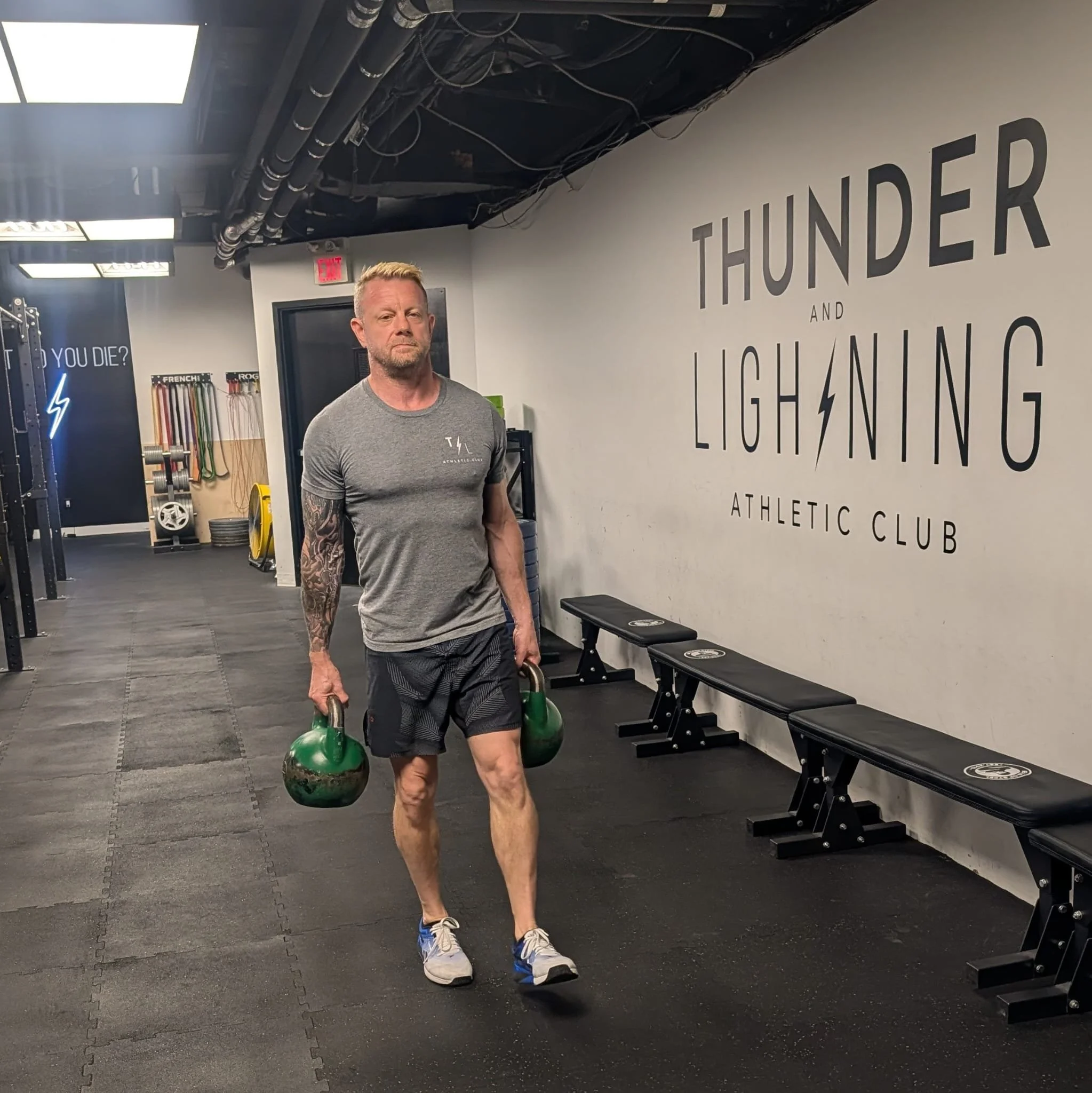
Strength training is not optional for peak health and quality of life. And you’ll feel much younger when you do it.
Much of the online fitness industry has decided that people over 50 want resistance bands and 5 lb weights. Gyms have a “senior” program that is a gentler version of everything else, as though the goal after a certain birthday is to move carefully and not break anything. We find it crazy to think that over 50 used to be on the cusp of senior citizen. Your 50s should feel like your 40s for the most part.
This is the decade where strength training stops being optional and starts being one of the most important things you can do for how the next thirty years go.
What’s actually happening to your body
Muscle mass declines with age unless something is done about it, and the rate picks up as you get older. Bone density follows a similar track. These aren’t superficial problems. They’re the reason falls become dangerous in your seventies and eighties rather than just embarrassing. The mortality rate of seniors who fall and suffer a hip fracture can be as high as 30% in the first year.
Most of what determines whether a fall ends in a fracture is the amount and density of muscle you have, the bone density and whether you have the agility to catch yourself in the first place. All three respond to strength training. None of them respond in any significant way to walking.
The other piece is metabolic. Muscle is where your body stores and uses glucose. Less muscle means worse blood sugar control, which is a big part of why type 2 diabetes risk climbs in this age group even in people whose diets haven’t changed.
The independence argument
Here’s the part we think matters most, and it’s not about how you look.
Getting off the floor without help. Carrying groceries up stairs. Lifting a grandchild. Getting out of a chair without using your arms. Those are the things that decide whether you live in your own home at 80 - and they’re all strength.
People don’t lose independence gradually and evenly. It usually goes in steps, after a fall or a surgery or a hospital stay, and whether you recover from one of those has a lot to do with how much physical reserve you had going in. Training now is building that reserve.
It’s not too late, and that’s not us being nice
The research on this is consistent and it surprises people. Adults in their 60s, 70s, and 80s build muscle and strength in response to resistance training. Not as fast as a 25 year old, but the direction is the same and the gains are real. Some of the most striking studies in this area were done on nursing home residents in their 90s.
If you’re 52 and thinking you’ve missed the window, you haven’t. You’ve got more upside available to you than you think. Your body responds positively to weight training no matter what age you are.
What training should actually look like
Heavier than you’ve been told. The adaptations that protect bone density and build real strength require loading that’s actually challenging. Three sets of fifteen with pink dumbbells doesn’t do it. You want to be working in a range where the last couple of reps are hard, with weight that progresses over time.
The movements don’t need to be exotic. Squat, hinge, push, pull, carry. Loaded properly and progressed over months, those cover almost everything that matters.
What does change after 50 is recovery. You’ll generally need more time between hard sessions than you did at 30. That’s not a reason to train less hard, it’s a reason to train hard a little less often and manage the week properly. For most people, two or three well-programmed sessions a week with adequate recovery beats five sessions that leave you permanently beaten up.
Technique matters more too, not because you’re fragile but because you’ve got less margin for grinding through a bad pattern for six months and then dealing with the shoulder problem it caused. This is the age where coaching earns its money.
The things people worry about
“I have a bad knee/back/shoulder.” Most people over 50 do. A good coach programs around it, and in a lot of cases the right training is part of what makes it better. What makes it worse is doing nothing and losing the muscle that supports the joint.
“I’ll hurt myself.” Supervised strength training has a lower injury rate than most recreational sports. The risk isn’t lifting weights, it’s lifting them badly without anyone watching.
“I’m not in good enough shape to start.” You start where you are. That’s the whole point of starting.
LIft Heavy and properly, and you’ll feel better and younger.
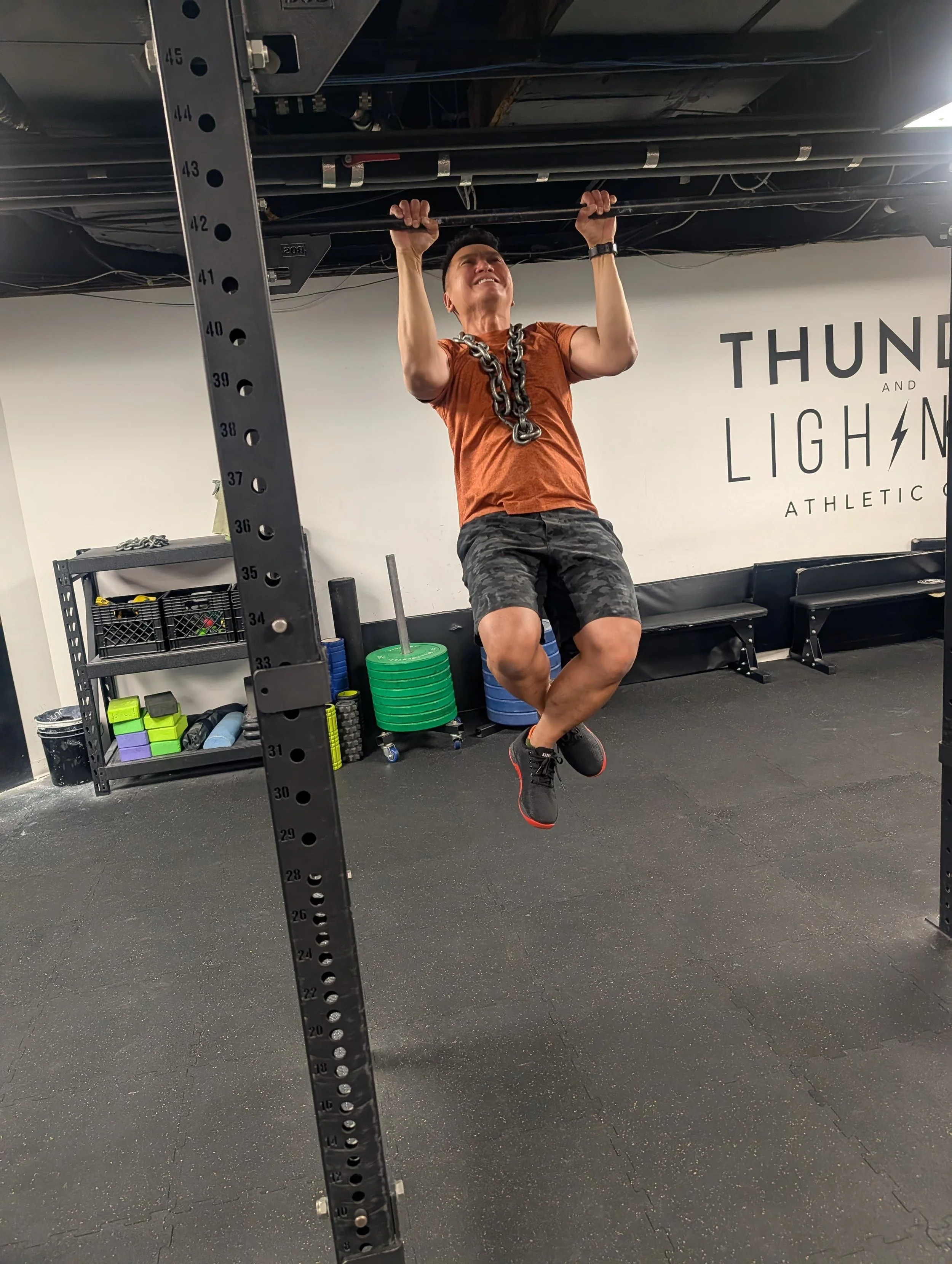
You can always get stronger and accomplish new goals.
The people in our gym in their 50s
Anicka, Erin, Jet, Jess, Day and myself (David) are just some of the people at our gym in their 50s. Anicka and Erin consistently beat people 10 and 20 years younger than them in workouts. Day recently hit a PR in his deadlift and continues to get stronger. Jess and Jet both competed in our latest powerlifting meet and PRed their totals from last year, and have both already since increased their lifts. I don’t win as many workouts as I used to but my training allows me to practice jiujitsu and be competitive with people 10, 20 and 30 years younger than me.
Take the Next Step
If you’re over 50 and want to find out what you’re actually capable of, come in for a free No-Sweat Intro. We’ll go through your history, your injuries, and your goals, and build something that fits.